


Ebook Passive Income: How to Create, Publish & Sell in 2025
Stop trading time for money.
I’ve been in the digital marketing space for over a decade, and I’ve seen trends come and go. Dropshipping, crypto, faceless YouTube channels—they all have their moments. But the “write once, sell forever” economics of ebooks remain unbeaten.
You might think the market is saturated. You’d be wrong. According to a 2025 projection by Whop and Statista, the global eBook market is expected to hit $14.9 billion in 2025. That is not a shrinking industry; it’s a gold mine for those who know how to dig.
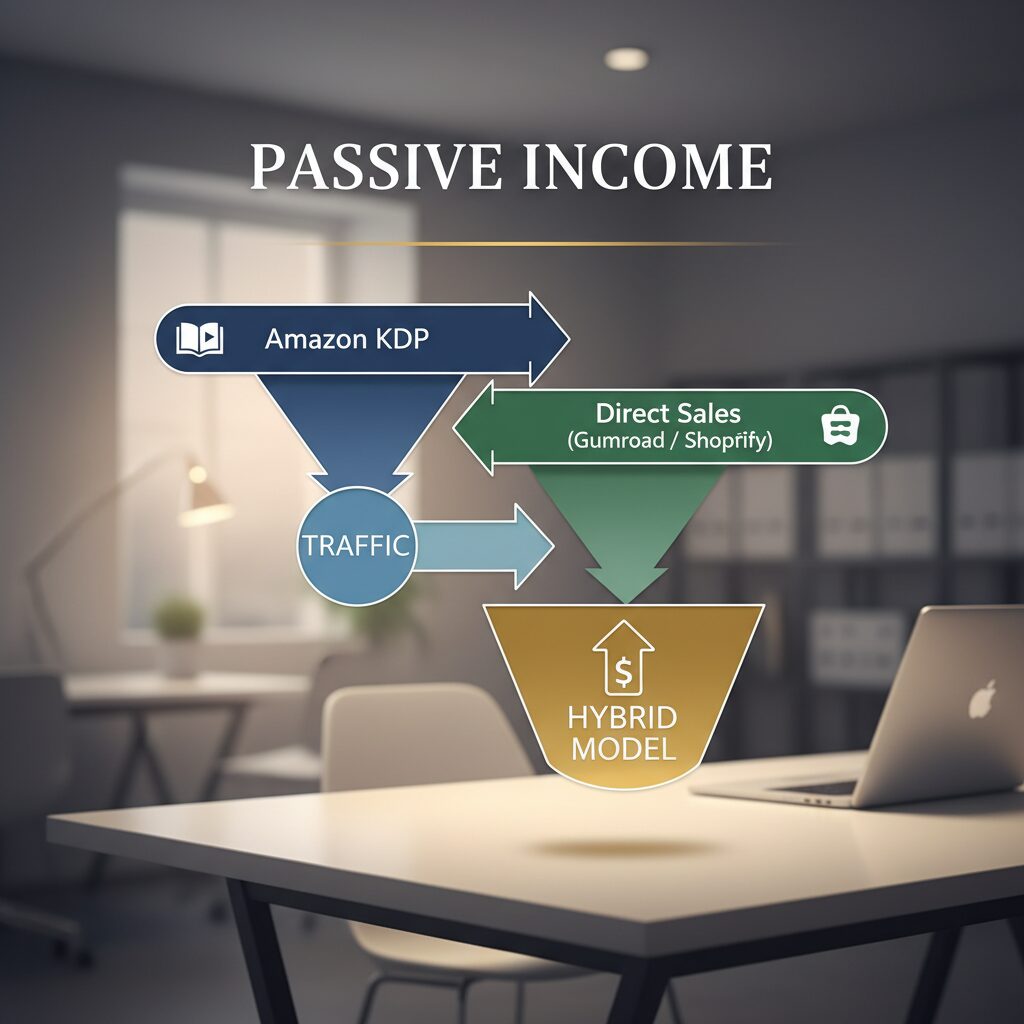
However, the game has changed. You can’t just slap a PDF on Amazon and retire. In 2025, the real money lies in the “Hybrid Publishing Model”—a strategy that combines the massive traffic of Amazon with the high profit margins of direct sales.
This isn’t a get-rich-quick scheme. It is a front-loaded business model. You do the work once, and if you build the system correctly, it pays you while you sleep.
Table of Contents
- Why Ebooks Are Still the King of Digital Passive Income
- Step 1: Niche Validation & Profitability Analysis
- Step 2: Rapid Ebook Creation (The Modern Workflow)
- Step 3: The “Hybrid Publishing” Strategy
- Step 4: Packaging Your Product for High Conversions
- Step 5: Building the Passive Traffic Machine
- Common Pitfalls & How to Avoid Them
- FAQ
Why Ebooks Are Still the King of Digital Passive Income
Let’s look at the numbers, because feelings don’t pay rent. The beauty of an ebook is the margin. Unlike physical products where you have shipping, breakage, and returns, a digital file costs $0.00 to replicate.
According to Mordor Intelligence’s 2025 Forecast, consumer eBooks lead the market with a 58% share, but interactive and educational eBooks are the fastest-growing segment.
Furthermore, the perceived value of digital reading is increasing. A December 2024 report from Toner Buzz notes that the average price gap between eBooks and hardcovers narrowed to just $2 in 2024. Readers are willing to pay near-physical prices for digital convenience.
From my perspective, this is the best entry point for passive income because the barrier to entry is low, but the barrier to success is high enough to keep the lazy people out.
Step 1: Niche Validation & Profitability Analysis
The biggest mistake I see beginners make is writing what they want to write, rather than what the market wants to buy. You are not writing a memoir; you are solving a problem.
Using “Amazon Bestseller Rank” to Spy on Demand
Amazon tells you exactly what sells. Every book has an Amazon Bestseller Rank (ABSR). The lower the number, the more sales it’s getting.
- Rank #1 to #10,000: Selling 15-100+ copies a day. (Highly competitive).
- Rank #10,000 to #30,000: Selling 5-15 copies a day. (The Sweet Spot).
- Rank #100,000+: Selling < 1 copy a day. (Avoid).
I recommend targeting niches in the #10,000 to #30,000 range. This indicates there is money flowing, but you won’t be crushed by Stephen King or James Patterson.
High-Profit Niches for 2025
Based on current trends, these three areas are exploding:
- Specialized AI Skills: “How to use Midjourney for Architecture” rather than just “How to use AI.”
- Micro-Health: “Gut health recipes for busy moms” rather than generic “Diet books.”
- Financial Independence for specific careers: “Investing for Nurses.”

Step 2: Rapid Ebook Creation (The Modern Workflow)
Gone are the days when writing a book took a year. However, let me be clear: Do not generate a book with ChatGPT and publish it unedited. That is a fast track to getting banned from KDP and ruining your reputation.
Amazon KDP now explicitly requires you to disclose if your content is AI-generated. If you lie, you risk account termination. Use AI to outline and draft, but the final voice must be yours.
The Ethical AI Workflow
Here is the workflow I use to produce high-quality guides in under 7 days:
- The Outline (AI Assisted): Ask Claude or ChatGPT to “Create a chapter outline for a book on [Topic] that solves [Specific Pain Point].”
- The “Brain Dump” (Human): Record yourself talking about each chapter. You have the knowledge; speaking is faster than typing.
- The Cleanup (AI + Human): Transcribe your audio, then use AI to format it into prose. Then, manually edit it to add your personality, stories, and nuance.
As Publishers Weekly reported in November 2024, self-published titles rose by 7.2% in 2023. The competition is fierce. Quality is your only defense.
Step 3: The “Hybrid Publishing” Strategy
This is the most critical section of this article. Most gurus tell you to choose: Amazon KDP or selling on your own website. Do both.
According to Automateed’s 2024 data, Amazon KDP holds approximately 67% of the U.S. ebook market. You cannot ignore that visibility. However, relying solely on Amazon is dangerous.
The Profit Engine: Direct Sales
While Amazon brings volume, direct sales bring margin. Platforms like Gumroad or Shopify allow you to keep 90%+ of the revenue and, crucially, collect customer emails (which Amazon doesn’t share with you).
Consider the Gumroad Creator Report, which highlights that the top 1% of creators earn 60% of the total revenue. This disparity exists because top creators treat their ebook as a business, not a hobby.
💰 The Direct Sales Math: Why Volume Isn’t Everything
Let’s compare selling a $10 ebook on Amazon vs. your own site.
| Metric | Amazon KDP (at $9.99) | Gumroad/Direct (at $15.00) |
|---|---|---|
| Royalty Rate | 70% (minus delivery fees) | ~90% (minus transaction fees) |
| Net Profit Per Sale | ~$6.80 | ~$13.20 |
| Sales Needed for $1,000 | 147 Sales | 76 Sales |
| Customer Data Owned? | ❌ NO | ✅ YES |
Takeaway: You need half the traffic on your own site to make the same money, plus you build an email list to sell future products.
Real-World Case Study: Hazel Paradise
Look at Hazel Paradise, a Gumroad seller. By bypassing the Amazon ecosystem and selling simple templates and ebooks directly to her audience, she generated over $14,000 from ebook sales with just 325+ copies sold. She leveraged the “Direct Sales” model to charge a premium price that Amazon shoppers usually reject.
Step 4: Packaging Your Product for High Conversions
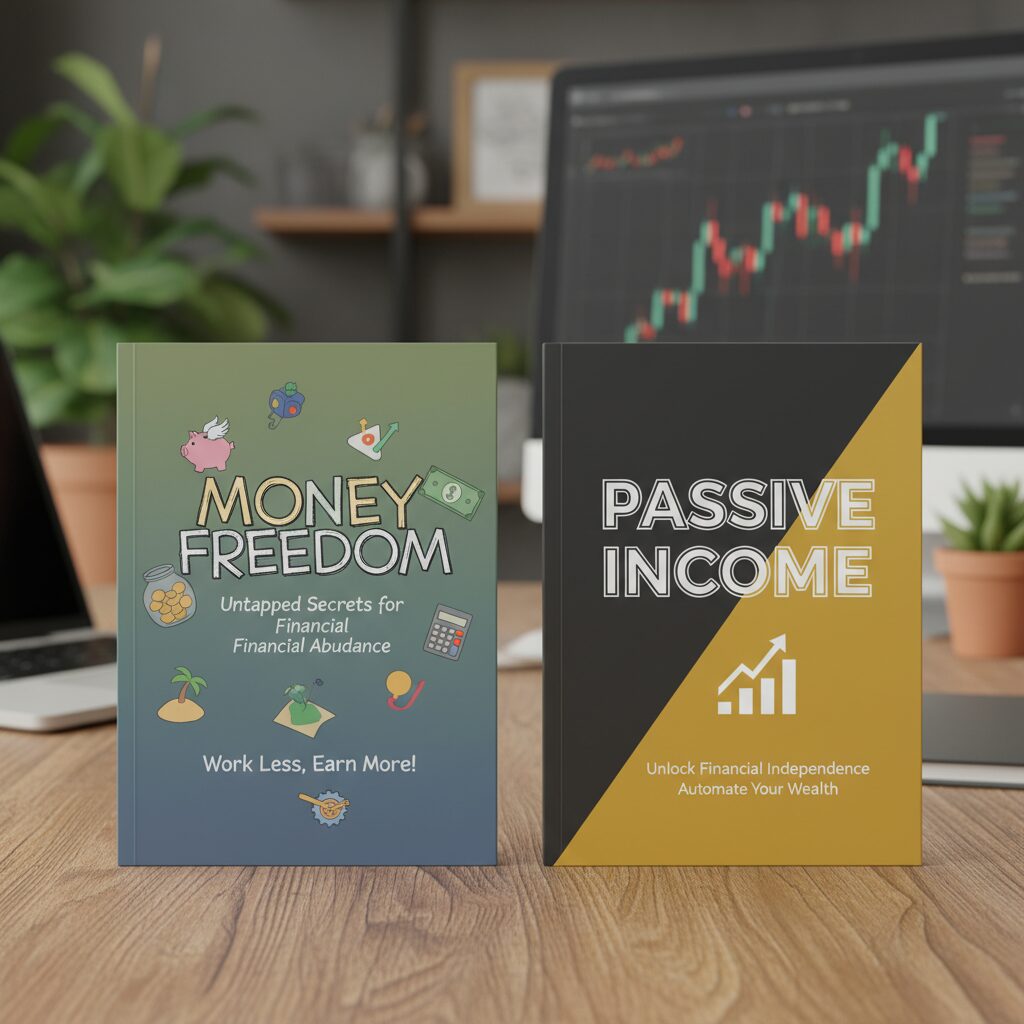
People do judge a book by its cover. In 2025, you have no excuse for a bad cover.
Cover Design Psychology
Your cover must look legible at a thumbnail size (which is how 99% of people will see it on mobile). Tools like Canva are okay for lead magnets, but for a paid product, I recommend spending $10-$50 on a professional template or hiring a designer.
Writing a Description that Sells (AIDA)
Use the AIDA framework for your description:
- Attention: Hook them with a question. (“Tired of yoyo dieting?”)
- Interest: Share a surprising stat or fact.
- Desire: List the benefits (not features) they will get.
- Action: Tell them exactly what to do. (“Click Buy Now to start today.”)
Step 5: Building the Passive Traffic Machine
Publishing is 20% of the work. Marketing is the other 80%.
The “Free Sample” Lead Magnet Funnel
This is how Jacques Hopkins generated over $4 Million+ in revenue with his “Piano in 21 Days” business (Side Hustle Nation Source). He didn’t just sell a course; he used a free ebook as an “entry drug.”
The Strategy: Give away the first chapter or a “Lite” version of your ebook for free in exchange for an email address. Then, use an automated email sequence to sell the full version.
Amazon SEO: Mastering Backend Keywords
When you upload to KDP, you get 7 keyword slots. Do not waste these. Use long-tail phrases. Instead of “Cookbook,” use “Gluten-free cookbook for beginners 2025.”
Common Pitfalls & How to Avoid Them
The “PLR” Trap
You will see “gurus” selling Private Label Rights (PLR) ebooks—pre-written books you can buy and resell. Avoid this trash. The content is usually outdated, duplicated thousands of times, and provides zero value. Amazon is actively purging low-quality PLR content.
Pricing Psychology
Don’t undervalue your work. A 2025 Indie Author Survey by Written Word Media found that 56% of surveyed indie authors earn over $100/month, but the top 13% earning over $5,000/month usually have a catalog of books or higher price points.
FAQ
Is selling ebooks truly passive income?
It is “front-loaded” income. You work hard once (writing and setting up the funnel), and then sales can come in automatically. However, you must occasionally update the content and maintain your ads or traffic sources.
How much money can you make selling ebooks?
It varies wildly. A hobbyist might make $50/month. A strategic author using the Hybrid Model can make $1,000–$10,000/month. Remember, the top 1% on Gumroad control 60% of the revenue—effort correlates with income.
Do I need an ISBN for an ebook?
For Amazon KDP, no. They assign you a free ASIN. However, if you want to distribute to libraries or other retailers via IngramSpark, purchasing your own ISBN is recommended for professional branding.
How long should an ebook be to sell?
For non-fiction, quality beats quantity. A 10,000-word guide that solves a painful problem is worth more than a 50,000-word book of fluff. Focus on the solution, not the page count.
Conclusion
Creating passive income with ebooks in 2025 is not about being the next Shakespeare. It is about being a helpful problem solver.
The market data is clear: demand is rising, people are comfortable paying for digital goods, and the tools to create have never been more accessible. But the winners will be those who treat this as a business.
My final advice: Start small. Validate one niche. Write one 10,000-word guide. Publish it on KDP for traffic and Gumroad for profit. Just don’t let next year arrive without having started today.
