

How to Create an Online Course for Passive Income: The 2025 Blueprint
The “upload and pray” method is dead.
If you walked into the online course world five years ago, you could slap a few videos on a platform, hit publish, and watch the PayPal notifications roll in. I’ve seen firsthand how easy it used to be. But if you try that today, you’ll hear nothing but crickets.
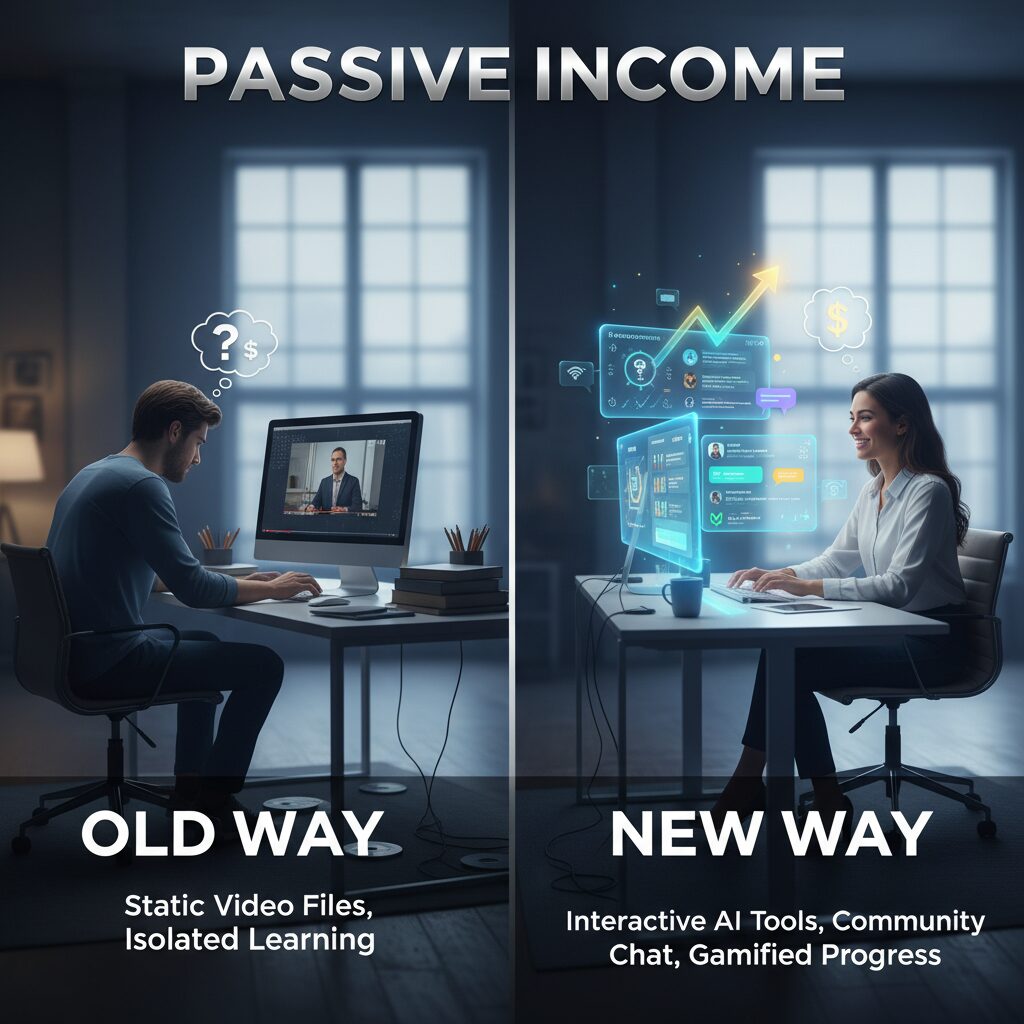
Yet, the opportunity hasn’t vanished—it has evolved. We are witnessing a massive shift in the $250 billion creator economy. The money is no longer in static information; it’s in AI-enhanced, community-driven transformation.
This isn’t just about recording your screen anymore. It’s about building an asset that works for you while you sleep. Whether you are a consultant, a coder, or a knitter, learning how to create an online course for passive income is the single most effective way to decouple your time from your earnings.
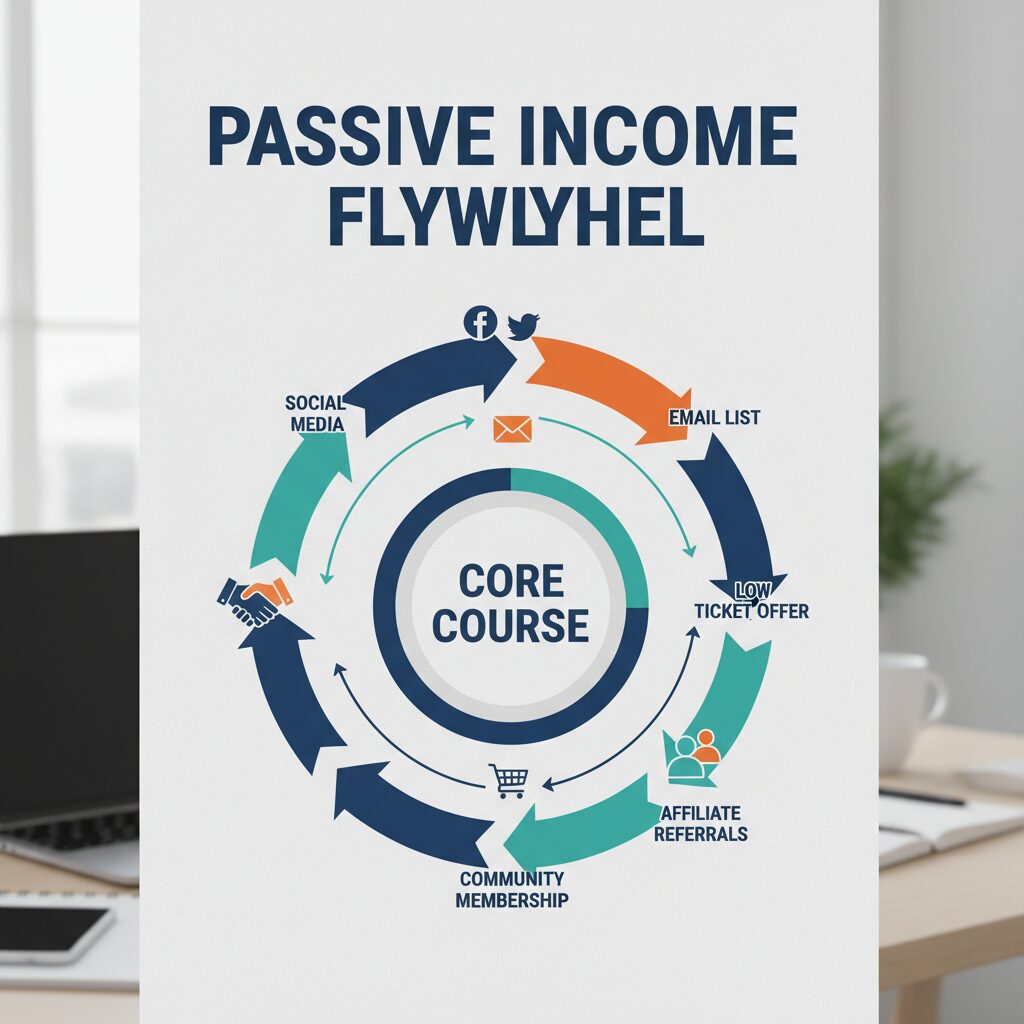
In this blueprint, I’m going to walk you through the exact 5-step validation process, the AI tools that cut production time in half, and the “Flywheel” model that keeps revenue recurring long after you’ve finished recording.
The State of the eLearning Market (Why Now?)
You might be asking yourself, “Am I too late to the party?” The data suggests the party is just getting started.
According to a November 2024 report by Market Growth Reports, the Global eLearning market size was estimated at USD 2096.27 million in 2024 and is projected to reach USD 2580.37 million by 2033. That is steady, reliable growth.
But the real explosion is happening specifically within the creator economy. Eric Sheridan, a Senior Equity Research Analyst at Goldman Sachs, stated in April 2024 that “The creator economy is expected to roughly double to $480 billion by 2027, up from about $250 billion in 2023.”
However, the way people buy has changed. In my experience working with digital product creators, the skepticism toward “get rich quick” courses is at an all-time high. Consumers are smart. They don’t want information; they want a result.
This data proves that if you have a skill, there is an audience waiting to pay for it—provided you package it correctly.
Phase 1: Validating Your Skill Set (Don’t Create Yet)
The biggest mistake I see people make is spending three months filming a course nobody wants. Before you record a single frame, you must validate the demand.
Identifying the “Bleeding Neck” Problem
Passive income products fail when they are “nice to have.” They succeed when they solve a “bleeding neck” problem—an urgent, painful issue that your audience is desperate to fix.
You need to look for the gap between where your student is now (Point A) and where they want to be (Point B). Your course is simply the bridge.
Using AI to Find Content Gaps
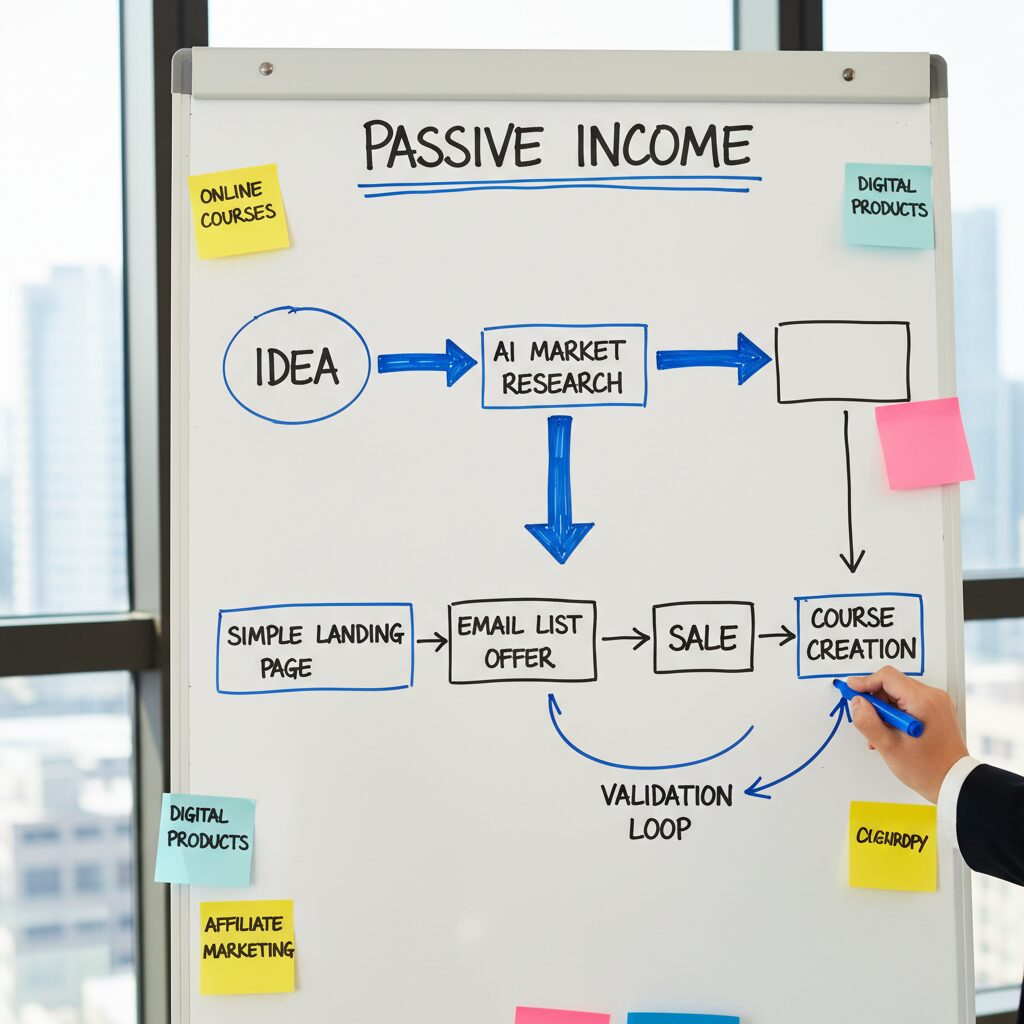
You don’t need to guess what people want. AI tools have made market research incredibly fast. According to the Kajabi State of Creators Report (2024), 73% of creators believe AI tools will help them save over 26 hours a week on work. Use that time for research.
Try this prompt in ChatGPT or Claude:
“Analyze the top 10 negative reviews for [Competitor’s Course Name] or [Best Selling Amazon Book on Your Topic]. What are the students frustrated about? What is missing? Outline a course curriculum that specifically solves these complaints.”
The “Pre-Sell” Method
Real validation is money in the bank. I always advise creators to pre-sell their course. Set up a simple landing page outlining the curriculum and offer a 50% “Beta User” discount. If you can’t get 10 people to buy it before it exists, you won’t get 100 people to buy it after you’ve spent months building it.
Phase 2: Structuring a “Sticky” Curriculum
If you want true passive income, you need good reviews. Good reviews come from students actually finishing your course. The industry standard completion rate for self-paced courses is shockingly low—often around 10-15%.
However, data from Thinkific and New Zenler in 2024 suggests that courses with community support and coaching elements see 70%+ completion rates. To replicate this passively, your curriculum needs to be “sticky.”
Micro-Learning vs. Deep Dive
Nobody wants to watch a 60-minute video anymore. The trend in 2025 is micro-learning. Break your content into 5-10 minute modules that solve one specific sub-problem.
Recent data from Email Vendor Selection predicts that micro-learning usage is up by 700%, with retention rates of 70-90% compared to traditional learning.
Integrating Downloadable Assets
To increase the perceived value of your course without filming more video, include templates, PDFs, and checklists. According to Thinkific’s 2024 Learning Trends, 48% of people surveyed are willing to pay for downloadable content from a creator they follow.
Phase 3: Production on a Budget (Tech Stack)
You do not need a cinema camera. In fact, overly polished production can sometimes feel impersonal. Authenticity sells.
Screen Recording vs. Talking Head
For technical skills (coding, design, Excel), screen recording is superior. Tools like Loom or OBS are free or cheap. If you are teaching soft skills (leadership, confidence), “talking head” video is necessary to build trust.
Hosting Platforms: Marketplaces vs. Self-Hosted
This is the most critical technical decision you will make. You generally have two options:
| Feature | Marketplace (e.g., Udemy) | Self-Hosted (e.g., Teachable, Kajabi) |
|---|---|---|
| Traffic Source | They bring the traffic (millions of users). | You must bring your own traffic. |
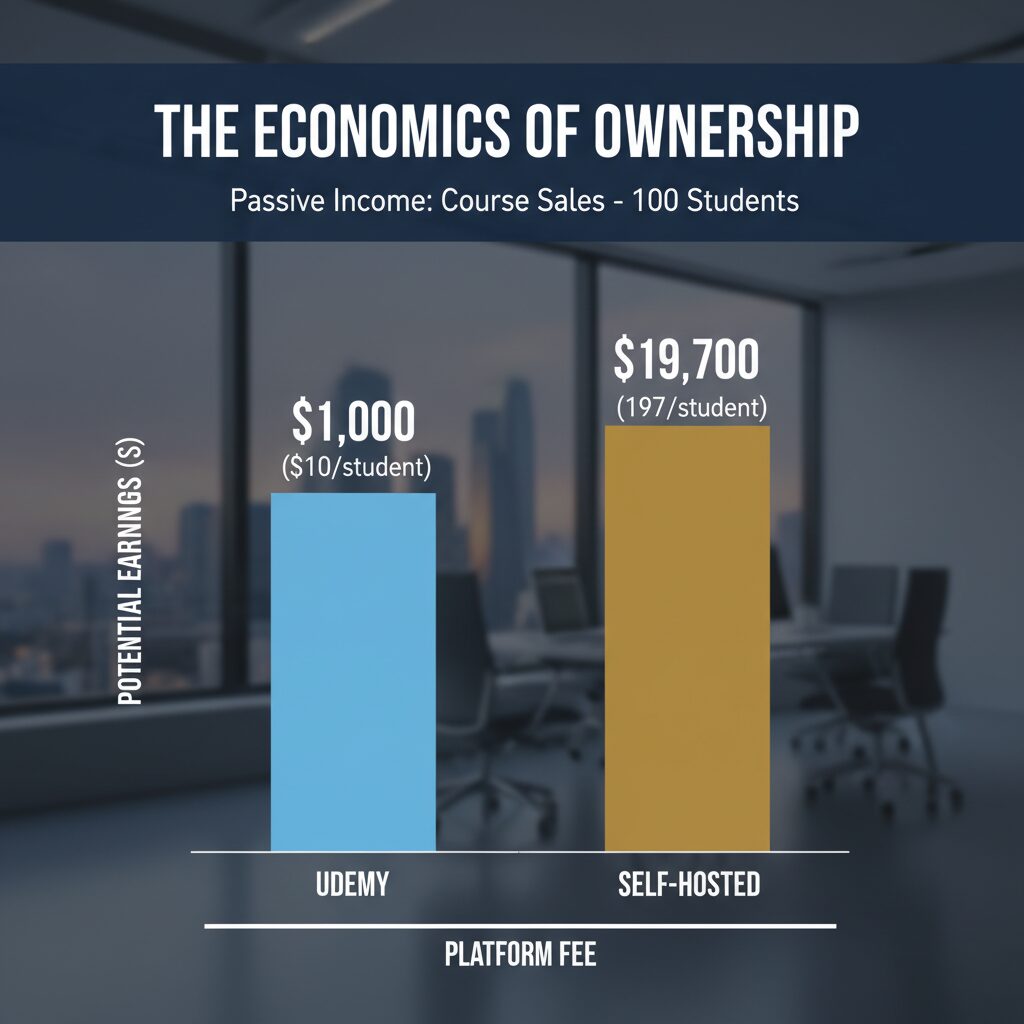
| Pricing Control | Low (frequent $10 sales). | High (You set the price, e.g., $297). |
| Data Ownership | They own the student email list. | You own the student email list. |
| Best For | Beginners with zero audience. | Creators wanting to build a brand/business. |
According to the Teachable 2024 Rewind, creators have earned more than $10 Billion in lifetime GMV across Teachable and its parent company Hotmart. This demonstrates that the self-hosted model creates millionaires, while marketplaces create pocket money.
Phase 4: Building the “Passive” Sales Funnel
A course sitting on a website isn’t passive income; it’s a storage unit. To make it passive, you need an automated sales machine.
The Diversification Strategy
Don’t rely on just one traffic source. The Kajabi State of Creators Report (April 2024) highlights that creators making over $150,000 annually tend to have seven distinct income sources. Your course should be the core, but your funnel feeds it.
Case Study: Owning the Audience
Consider Hayley Sacks, known as Mrs. Dow Jones. She operates in the finance niche. According to 2024 case studies from Forbes and Teachable, she successfully translated over 1 million Instagram followers into a structured course business.
Her strategy was simple but brilliant: she moved her “rented audience” (Instagram followers who could disappear with an algorithm change) to an “owned audience” (email subscribers and course students). This is the key to longevity.
Automated Email Sequences
Here is the “Sleep Sales” sequence I recommend:
- Value Email (Day 1): Deliver a free lead magnet (PDF/Checklist) related to the course.
- Problem Agitation (Day 2): Discuss the struggle of not solving the problem.
- The Pivot (Day 3): Introduce your course as the solution.
- Social Proof (Day 4): Share screenshots of student wins.
- Scarcity/Close (Day 5): Offer a bonus that expires at midnight.
Phase 5: Scaling with Community (The Retention Key)
The 2025 meta for online courses is “Community-Led Growth.” People come for the content, but they stay for the community.
Static courses are one-time purchases. Communities are recurring revenue. By adding a membership component (e.g., a monthly Q&A call or a Discord server) to your course, you turn a $200 one-time buyer into a $50/month subscriber for years.
Abigail Pumphrey, a creator in the digital business growth niche, reached over 30,000 students after eight years on the Teachable platform (source: Forbes, May 2024). Her success wasn’t due to chasing trends; it was due to consistency and nurturing a community over a decade.
FAQ: Common Questions on Course Creation
Yes, absolutely. As noted by the 2024 Market Growth Reports, the industry is still growing. However, the profit has shifted from low-quality, generic courses to high-quality, specialized, outcome-driven learning experiences.
It varies wildly. The top 10% of creators treat it as a business and earn six or seven figures. The bottom 50% often earn less than $1,000 a year because they lack a marketing funnel. It is not a lottery ticket; it is a business model.
No. You need a targeted following. I have seen creators with 2,000 email subscribers out-earn influencers with 100,000 Instagram followers because the small list was highly engaged and had a specific problem to solve.
Not necessarily. For technical topics, screen sharing is preferred. Furthermore, AI avatars (though I recommend using them sparingly) are becoming more accepted. However, humans connect with humans, so showing your face occasionally helps build trust.
Conclusion: Your Knowledge is an Asset
Creating an online course for passive income is not about getting lucky. It is about architectural design. You are building a digital asset that leverages your intellectual property.
The “passive” part comes after the hard work. You must validate the idea, build the curriculum, and set up the automation. But once that flywheel is spinning, it offers a freedom that trading hours for dollars never will.
Don’t let the fear of technology or the saturation of the market stop you. As the Goldman Sachs report indicates, we are heading toward a half-trillion-dollar economy. The only question is: will you be a consumer of that economy, or a creator?
Start today. Validate your idea. Send that first email. Your future students are waiting.
