
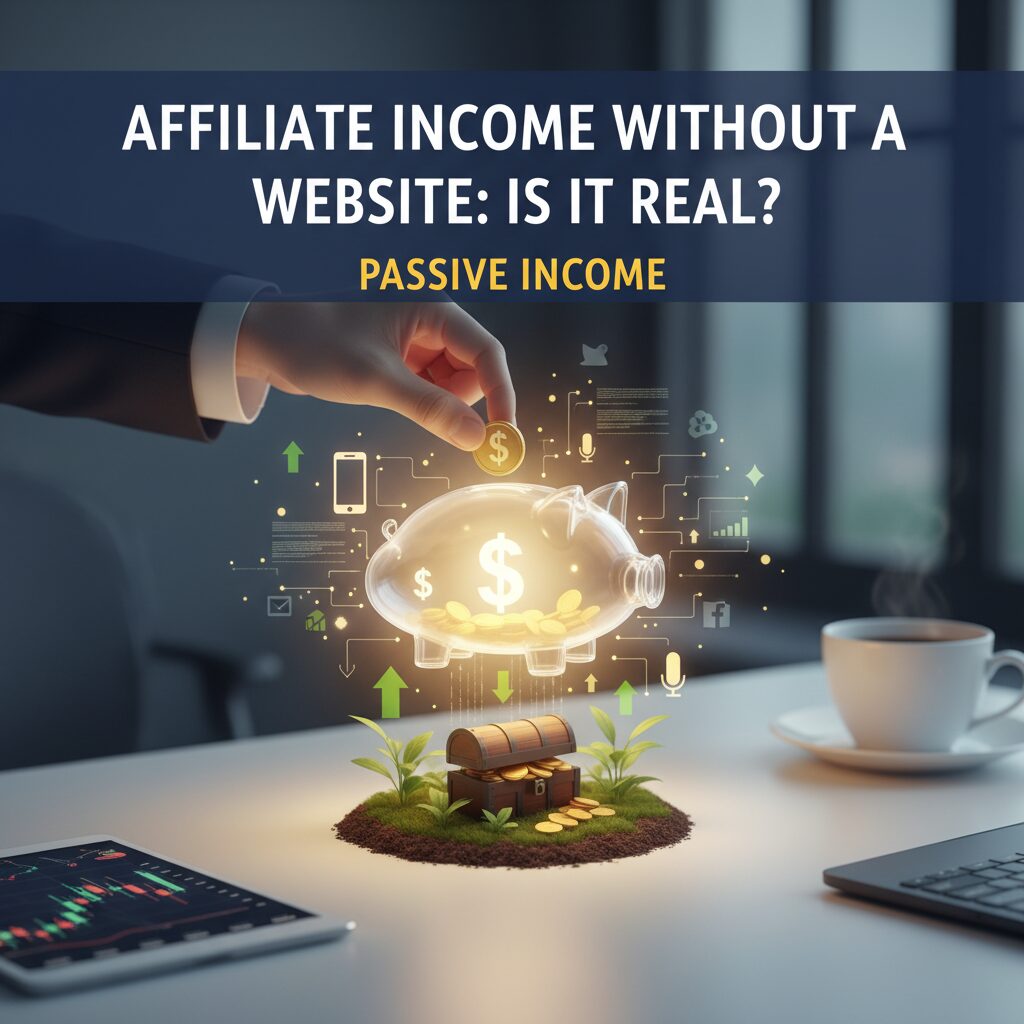
Affiliate Income Without a Website: Is It Real? (The 2025 Guide)
By The Affiliate Strategy Team | Updated for 2025 Compliance Standards
Let’s be brutally honest for a moment. You’ve likely seen the TikTok videos: a teenager dancing in their bedroom, pointing to text bubbles claiming they made $5,000 this week just by “posting links” without a website. It looks easy. It looks like a cheat code.
But when you try it—spamming your Amazon links in Facebook groups or Instagram comments—you don’t get a commission check. You get banned.
So, is affiliate income without a website a myth? No. But the “lazy” method is dead. The reality in 2025 is that while you don’t need a traditional blog or a WordPress site, you absolutely need a system. The landscape has shifted from “link dropping” to “social commerce.”
The global value of the affiliate marketing industry in 2024.
Source: Authority Hacker Market Report 2024
According to BloggingX and Authority Hacker’s Market Report 2024, the global affiliate industry is valued at over $17 billion and is projected to reach nearly $28 billion by 2027. The money is real. The question is, can you access it without buying a domain name and learning SEO? In this guide, we will break down the exact, FTC-compliant methods to succeed in 2025 without a website.
The “No Website” Myth vs. Reality
There is a massive misconception that “no website” means “no assets.” If you are building a business entirely on someone else’s platform (like TikTok or Instagram), you are building on what we call “borrowed ground.”
In my years consulting for digital marketers, the most devastating stories I hear aren’t about failed ads; they are about creators with 100k followers who woke up to a suspended account and zero income because they violated a platform’s Terms of Service (TOS) by spamming affiliate links.
Direct Linking vs. The “Bridge Page” Necessity
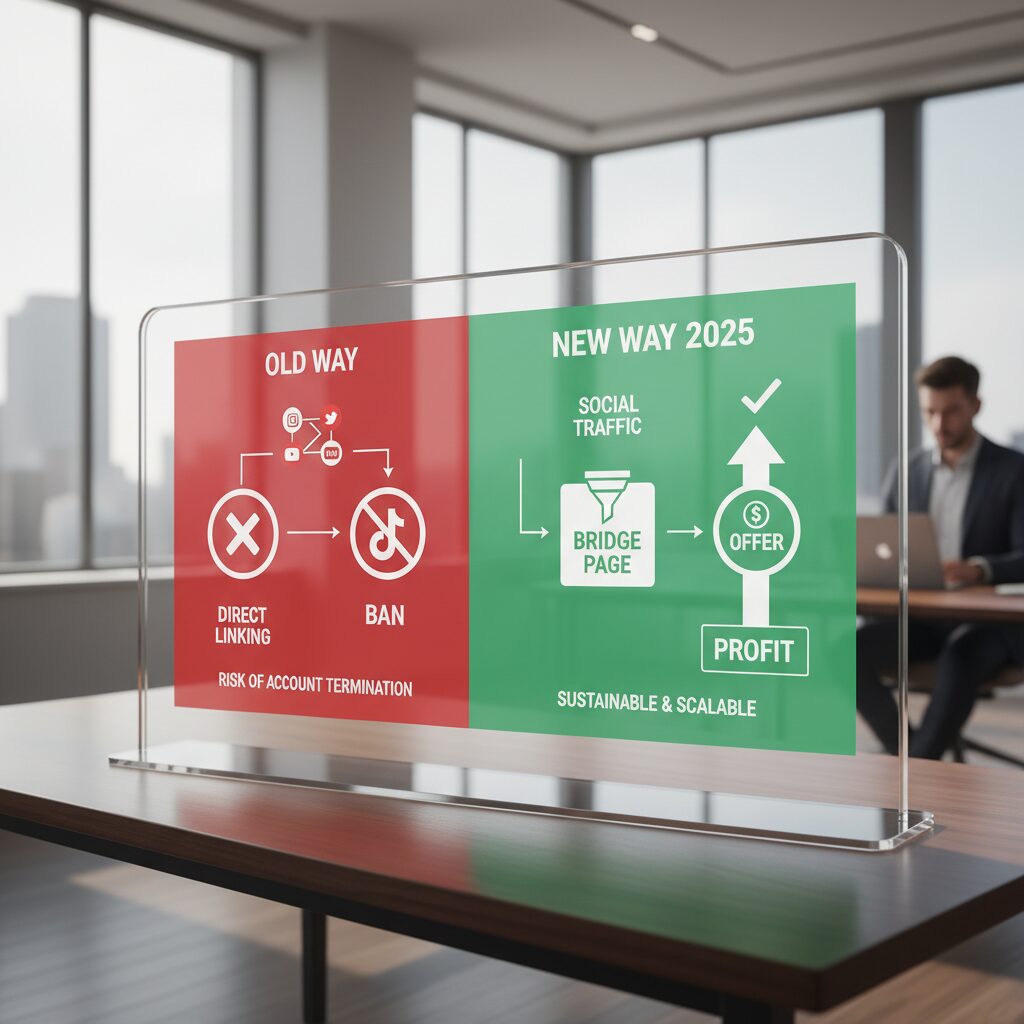
The biggest shift in 2025 is the death of direct linking. Years ago, you could run a Facebook Ad directly to a ClickBank offer. Today, platforms like Google, Facebook, and even Pinterest view this as a poor user experience. According to Linear Design’s 2025 Conversion Study, using a landing page (or bridge page) converts 10x better than direct linking.
Why? Because modern consumers are skeptical. They need a “warm-up.”
“To have an impact on your audience, you must understand their pain points… 60% of searches now result in zero clicks, meaning you must provide value instantly on the platform.”
Neil Patel’s insight is critical here. Users don’t want to leave their favorite app. Your goal isn’t just to shove a link in their face; it’s to provide value within the social ecosystem and then invite them to the next step.
The “Bridge Funnel”: Your Website Alternative
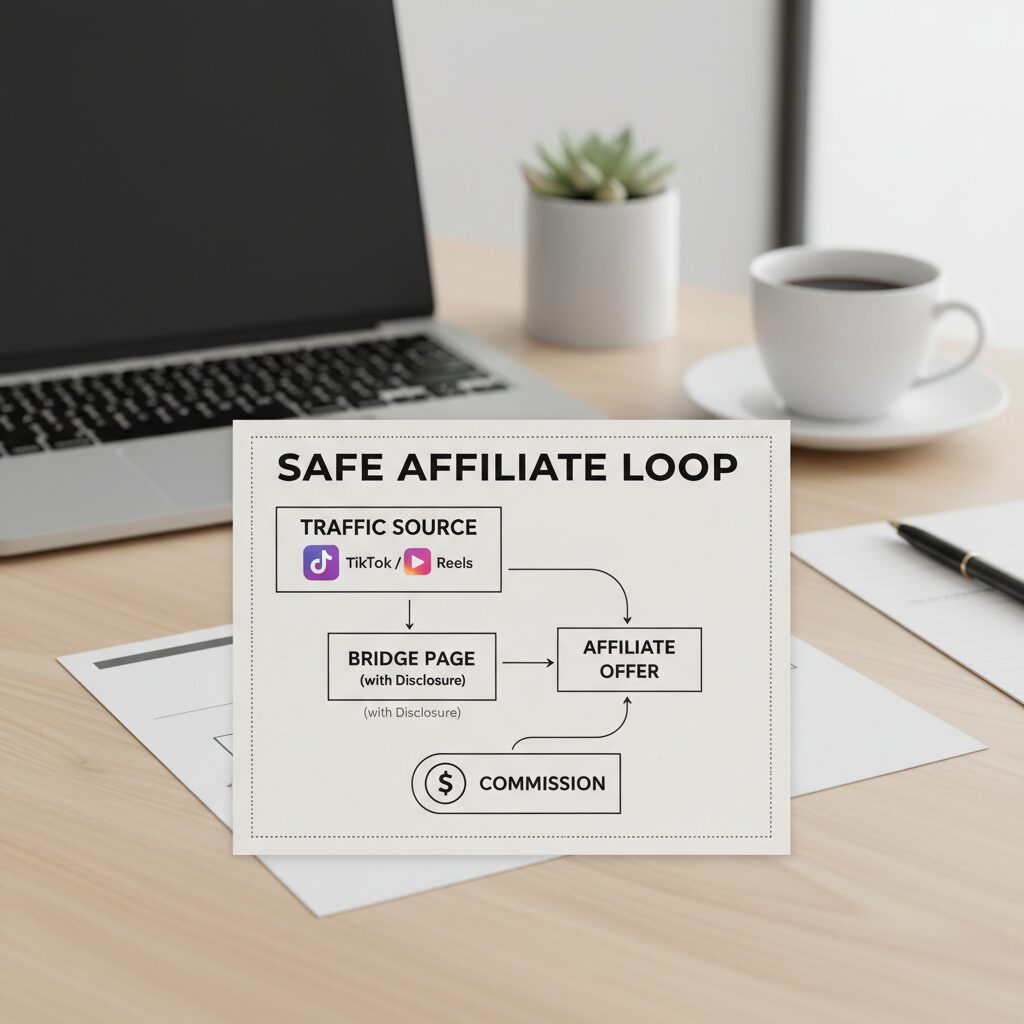
If you don’t have a website, you need a Bridge Page. This is a simple, one-page site that acts as a buffer between social media and the affiliate offer. It keeps you compliant with ad networks and builds trust.
Why You Need a Pre-Lander (Bridge Page)
Think of a Bridge Page as a digital handshake. You can build these for free using tools like Linktree, Carrd, or Systeme.io. This page serves three vital functions:
- Compliance: It houses your FTC disclosures (more on that later).
- Identity: It brands you, not just the product.
- Protection: If an affiliate program shuts down, you just change the link on your bridge page. You don’t have to edit 500 old YouTube descriptions.
Top 4 Verified Platforms for 2025
So, where do you get traffic if you don’t have SEO? You go where the attention is. According to Accio and Neil Patel Digital Trends 2025, social commerce sales are expected to reach $2 trillion by 2025. Here are the top platforms to leverage right now.
1. TikTok Shop & Reels: The Vertical Video Goldmine
Short-form video is currently the highest-ROI activity for affiliates without websites. The strategy here isn’t to be an “influencer” but to be a “reviewer.”
Case Study: The Student Strategy
A recent case study published in the Journal UIR (2024) analyzed a student-run account, “BestTikTokShop.” By utilizing trending audio and soft-selling narratives (showing the product in use rather than screaming “BUY NOW”), the account generated 200 million IDR (~$13k USD) in one year. They didn’t have a website; they had a phone and a ring light.
2. Pinterest: The Visual Search Engine
Pinterest is unique because it’s not a social network; it’s a search engine. Users go there specifically to plan purchases.
I’ve seen this work firsthand. A niche site project known as “Christy” utilized Pinterest “Idea Pins” to drive 20% of total traffic to a brand new affiliate offer in the first month. This bypassed the “Google Sandbox” entirely. On Pinterest, you can sometimes link directly, but I strongly recommend linking to a free Carrd page to capture emails.
3. YouTube Shorts: Faceless Cash Flow
You don’t need to show your face. “Faceless” channels that compile software demos, gadget unboxings, or financial tips are exploding. The strategy? Place your Bridge Page link in the pinned comment, not just the description (mobile users see comments first).
Choosing the Right Affiliate Programs
Not all programs allow “no website” promotion. You must read the fine print.
⚠️ CRITICAL WARNING: Amazon Associates
Amazon is strict. You cannot include Amazon affiliate links in offline materials like emails, PDFs, or SMS. This is a violation of their Operating Agreement (Section 5). If you plan to use email marketing (which you should), do not send Amazon links directly. Send them to a Bridge Page first.
High-Ticket SaaS (Software as a Service)
While Amazon pays 3-4% commissions, software companies often pay 30-40% recurring. Programs like ClickFunnels, Shopify, or various SEO tools often allow you to promote via social media as long as you use a proper disclosure.
Compliance & Legal Safety (The “Boring” But Vital Part)
If you take nothing else from this article, take this: Disclosure is not optional.
FTC Disclosures in 2025
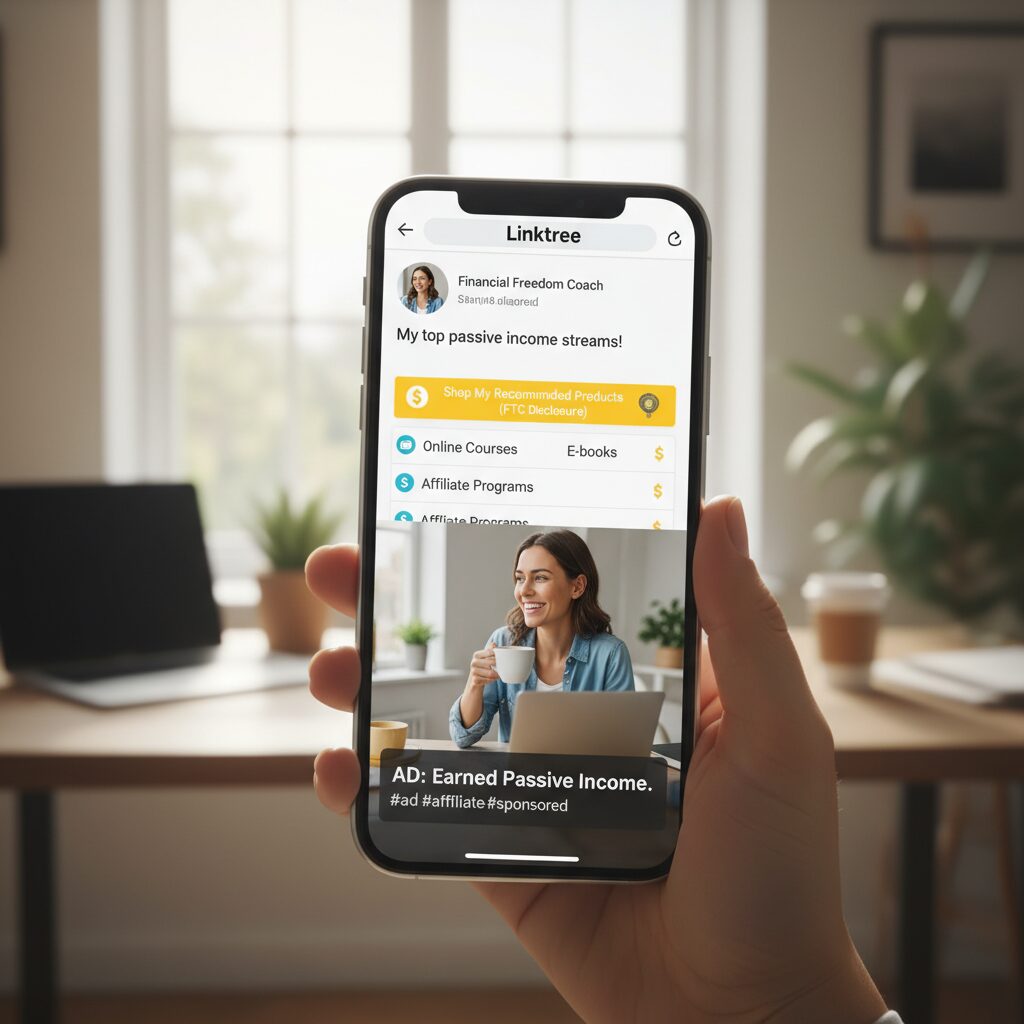
The Federal Trade Commission (FTC) has updated its guidelines. You cannot hide your affiliate disclosure behind a “Read More” button. It must be “clear and conspicuous.”
On Instagram or TikTok, utilizing the built-in “Paid Partnership” label is a good start, but text overlays saying “#Ad” or “Commissions Earned” are safer. According to Impact.com’s State of Partnership Marketing 2024, 88% of consumers trust personal recommendations, but that trust evaporates if they feel tricked.
“Partnerships are no longer just tools, they are essential strategies driving growth… consumers crave authentic recommendations from real people they trust.”
Interactive Tool: Commission Potential Calculator
Wondering what is actually possible? Use this calculator to estimate your earnings based on social media views rather than website hits.
💸 Affiliate Earnings Estimator
(Typical is 1% – 3%)
FAQ: Common Skepticism & Roadblocks
Can I use Amazon affiliate links on WhatsApp?
No. As stated in Section 5 of the Amazon Associates Operating Agreement, sharing links in private offline messages (WhatsApp, SMS, Email) is prohibited because Amazon cannot verify the traffic source. You must link to a bridge page first.
Do I need an LLC to start affiliate marketing without a website?
Technically, no. You can start as a sole proprietor. However, once you start earning significant income, forming an LLC protects your personal assets. Always consult a tax professional in your jurisdiction.
How do I verify a “No Website” account with Amazon?
When signing up, you must list your specific social media profile URLs (e.g., your YouTube channel or TikTok profile) in the “Websites and Mobile Apps” section. If you fail to declare a specific social account and generate sales from it, you risk a ban.
Conclusion: The “Hybrid” Future
Is affiliate income without a website real? Absolutely. eMarketer & Awin’s 2024 Report forecasts US affiliate spending to exceed $15 billion by 2028. The pie is growing, and you don’t need a WordPress blog to get a slice.
However, I want to leave you with a piece of advice from Pat Flynn, an industry veteran:
“Your earnings are a byproduct of how well you serve your audience… It allows you to maintain and strengthen your audience’s hard-won trust.”
Start without a website. Use TikTok, Pinterest, and YouTube to generate cash flow. But as you grow, use that money to eventually build your own platform—an email list or a simple site. That is how you turn a side hustle into a career that lasts.
