



How to Maximize Affiliate Marketing Commissions in 2025: The Advanced Guide
Let’s be honest for a second: most affiliate marketers are bleeding money.
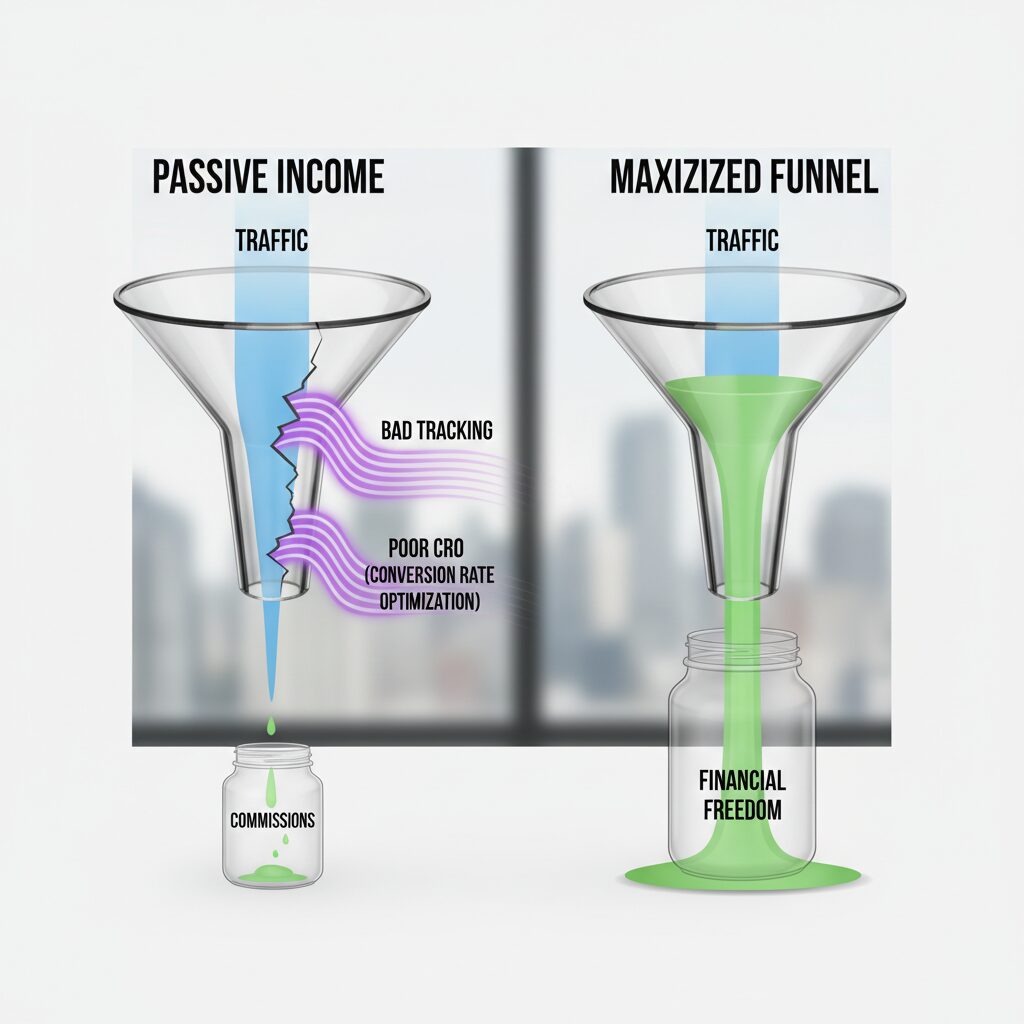
I’ve audited dozens of affiliate sites over the years, and the pattern is always the same. Creators obsess over traffic. They sweat over SEO. They pump out endless content. Yet, they leave 30% to 50% of their potential revenue on the table because they treat affiliate marketing as a passive game of “add links and pray.”
In 2025, that strategy is dead. With the global affiliate marketing industry projected to hit $31.7 billion by 2031, up from $18.5 billion in 2024 (according to Cognitive Market Research), the competition is fierce. The winners aren’t just getting more clicks; they are engineering higher values per visitor.
If you are still pasting raw Amazon links into a blog post and wondering why your income has plateaued, this guide is for you. We aren’t going to talk about “what is affiliate marketing.” You already know that. We are going to talk about server-side tracking, algorithmic negotiation, and the mathematics of maximizing every single click.
The Mathematics of Maximization (EPC > Commission Rate)
The biggest mistake I see beginners make is chasing the highest commission percentage. They see a hosting company offering $200 per sale or a SaaS product offering 50% recurring, and they go all in.
But here is the reality: 50% of zero is still zero.
To truly maximize commissions, you must shift your metric from “Commission Rate” to “Earnings Per Click” (EPC). EPC tells you the truth about an offer’s performance. It accounts for the conversion rate of the merchant’s landing page, which is a variable you can’t control but must measure.
The Magic Formula
Revenue isn’t luck. It’s a formula:
Traffic × CTR (Click-Through Rate) × CR (Conversion Rate) × Commission = Revenue
Most affiliates only focus on Traffic. But if you double your CTR (how many people click your link) or negotiate a better Commission, you double your revenue without needing a single extra visitor.
Calculate Your Potential Revenue
Use this calculator to see how small tweaks in CTR or Commission Rate can drastically change your monthly income.
Affiliate Revenue Projector
Technical Optimization: Tracking in a Cookieless World
If you are still relying on third-party cookies to track your sales in 2025, you are losing money every single day. Between iOS updates, Brave browser, and ad blockers, client-side tracking is crumbling.
According to Cropink, affiliate fraud and attribution loss cost the industry an estimated $1.4 billion annually. A massive chunk of that is simply valid sales not tracking back to you because the cookie was blocked.
The Solution: Server-Side Tracking (CAPI)
This sounds technical, but it’s the single highest-ROI technical change you can make. Instead of the user’s browser telling the merchant “Hey, I sent this guy,” your server talks directly to their server.
In my experience, moving to server-side tracking (often called Conversion API or CAPI) recovers about 15-20% of “lost” commissions. You don’t need to be a coder to do this anymore. Tools like RedTrack or Voluum handle this, and even CartMango notes that 60% of affiliate marketers will leverage such automation tools by 2025.
Google Analytics 4 (GA4) Custom Events
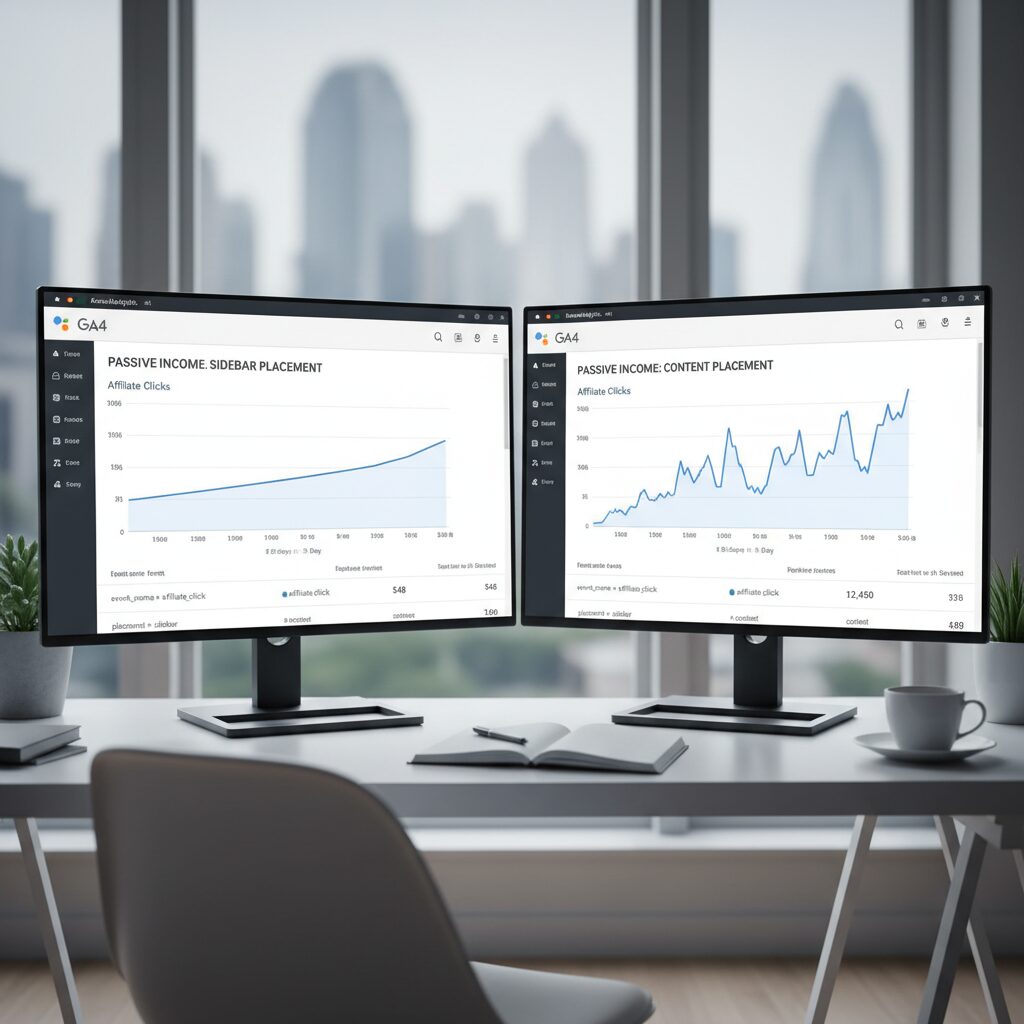
You cannot maximize what you cannot see. Most affiliates look at their affiliate network dashboard for data. That is a mistake. You need to see which specific link placement caused the click.
Set up “Outbound Click” events in GA4. Tag every link with a parameter like ?placement=sidebar_banner or ?placement=in_content_text. You will likely find that text links outperform banner ads by a massive margin, allowing you to delete the banners that slow down your site and focus on what works.
Conversion Rate Optimization (CRO) for Affiliates
Getting traffic to your site is hard. Getting them to click an affiliate link shouldn’t be. Yet, I see affiliates hiding their links in vague text or using “Buy Now” buttons that look like spam.
According to Influencer Marketing Hub (2024), the average conversion rate for affiliate marketing falls between 0.5% to 1%. If you want to beat that, you need to optimize the user experience.
The Power of Comparison Tables
Humans love shortcuts. We don’t want to read 2,000 words if we can see a summary. A Sales Funnel Clutch case study from 2025 showed that when David Turner’s Affiliate Success Academy simplified their copy and added visual roadmaps (like tables), conversion rates jumped from 4% to 13%.
Do this: Place a comparison table in the first 20% of your article. Compare your “Top Pick,” “Budget Pick,” and “Runner Up.”
“De-Selling”: The Wirecutter Strategy
This is counter-intuitive, but it works. To build radical trust, you must tell people who the product is NOT for.
A recent 2025 report from Shopify Trends indicates that 66% of consumers say they will pay more to purchase from brands (and by extension, affiliates) they trust. If you say, “This software is great, BUT it is not for small businesses with under $10k revenue,” the enterprise clients will trust you instantly and click.
“Affiliate marketing isn’t about commissions; it’s about helping people find the value they are looking for.”
— Neil Patel, via UpPromote (2025)
Negotiating “Super Affiliate” Terms
Here is a secret: Public affiliate rates are for suckers. Or rather, they are for beginners. Once you are driving consistent volume, you have leverage.
Most affiliate managers have a budget for “private rates.” If the public rate is 20%, they can often bump you to 30% simply because you asked. But you have to ask the right way.
The Exact Script to Use
Don’t just say “pay me more.” Prove your value. I’ve used this script to secure 50% raises in commission rates:
Hi [Name],
I’ve been promoting [Product] on [Your Website] for the past 6 months.
Currently, we are driving [X] clicks and [Y] sales per month with a conversion rate of [Z]%, which is well above the industry average.
I’m planning our content calendar for Q3 and want to give [Product] a premium spot in our upcoming “Best of” guide. However, to justify the paid traffic/resource allocation, I’m looking to move our tier from 20% to 30% CPA.
Can we make this happen? I’d love to scale our volume with you.
Best,
[Your Name]
The “Whale” Strategy: CPA to RevShare
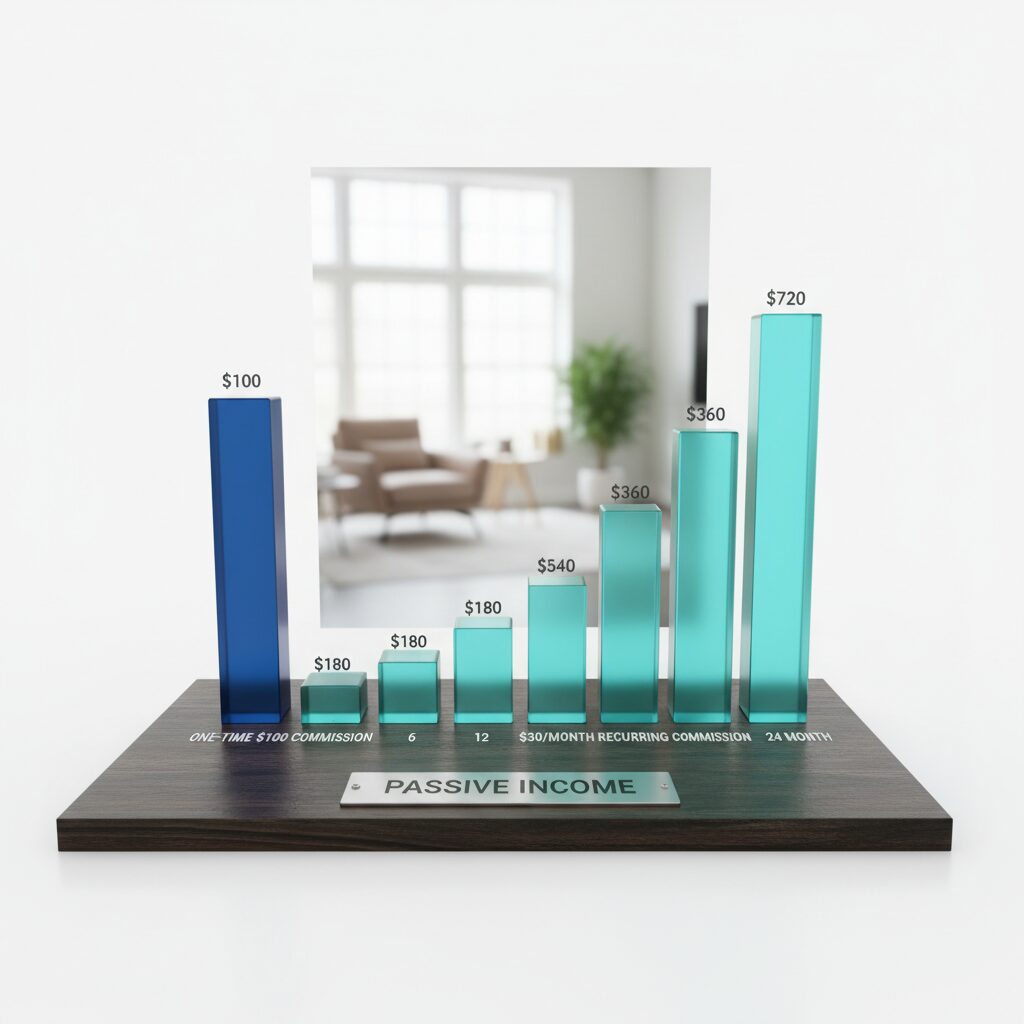
In high-ticket niches, try to negotiate a Hybrid model. Ask for a lower upfront CPA (Cost Per Action) but a lifetime Revenue Share (RevShare). Authority Hacker notes that SaaS affiliate programs often pay recurring commissions of 20-40% monthly. Over two years, a 20% recurring commission crushes a one-time $100 payout.
High-Ticket vs. Recurring Revenue Models
Should you sell a $2,000 course for a $1,000 commission, or a $50 software tool for $15/month?
In my opinion, the answer depends on your traffic source, but the Lifetime Value (LTV) play usually wins. Recurring revenue stabilizes your income. High-ticket requires constant fresh traffic.
However, high-ticket is essential for paid ads. You generally can’t run ads profitably for a $15 commission. But with a $1,000 commission, you can spend $300 to acquire a customer and still profit wildly.
Future-Proofing: AI & Compliance in 2025
The landscape is shifting. AI is flooding the web with content, and regulators are watching closely.
Using AI Without Losing Your Soul
CartMango reports that 60% of affiliate marketers will use AI by 2025. But be careful. Google rewards “Experience” (the ‘E’ in E-E-A-T). AI cannot have experience.
Use AI to summarize data, brainstorm headers, or create comparison tables. Do not use it to write your product review. Your personal anecdote about how the product failed you on a Tuesday night is what gets the sale.
FTC Disclosure 2025: Compliance Converts
Many affiliates hide their disclosures. This is a mistake. Clear disclosures actually increase trust.
According to Fintel Connect (2025), customers referred by transparent affiliates have a 21% higher retention rate. Place your disclosure at the very top. “I may earn a commission if you click this.” It signals honesty.
FAQ: Maximizing Your Affiliate Income
What is a good conversion rate for affiliate marketing?
While the industry average is between 0.5% and 1%, highly targeted “review” traffic should convert closer to 3% to 5%. If you are below 1% on a “Best [Product] Review” keyword, you have a trust issue or a page speed issue.
How do I ask an affiliate manager for a raise?
Always leverage data. Do not ask for a favor; propose a business deal. “I can send you 50 more sales this month if we bump the rate to 30%.” Make it a no-brainer for them.
Can I do affiliate marketing without a website in 2025?
Yes, social commerce is huge. FirstPromoter data shows mobile traffic accounts for 62% of affiliate visits. However, you are building on rented land. A website allows you to build an email list, which is the only asset you truly own.
Is high-ticket or recurring commission better?
Recurring is better for stability and cash flow. High-ticket is better for cash injections and paid ad scaling. A healthy portfolio should have both.
Conclusion
Maximizing affiliate marketing commissions in 2025 isn’t about working harder; it’s about working with better data. It’s about understanding that a 13% conversion rate on a trusted recommendation beats a 1% conversion rate on a hard sell every time.
Stop looking for the next “hack.” Start implementing server-side tracking. Start negotiating with your managers. Start building radical trust by telling your audience what not to buy.
The affiliates who treat this as a real business—analyzing EPC, optimizing LTV, and prioritizing the user—are the ones who will dominate the $31.7 billion market. The question is, are you ready to stop being just an affiliate and start being a trusted advisor?
