


15 Best Digital Products to Sell for Passive Income in 2025 (Data-Backed)
You’ve seen the headlines. Some 22-year-old just made six figures selling a PDF, and now you’re wondering if you missed the boat. Here’s the thing: you haven’t. But the water is getting crowded.
In my experience working with creators, the difference between making $50 a month and $5,000 isn’t luck—it’s asset selection. The “Creator Economy” isn’t slowing down; in fact, according to a report by Goldman Sachs (April 2023), the total addressable market is projected to nearly double, hitting $480 billion by 2027.
You don’t need a massive following to grab a slice of that half-trillion-dollar pie. You need the right asset.
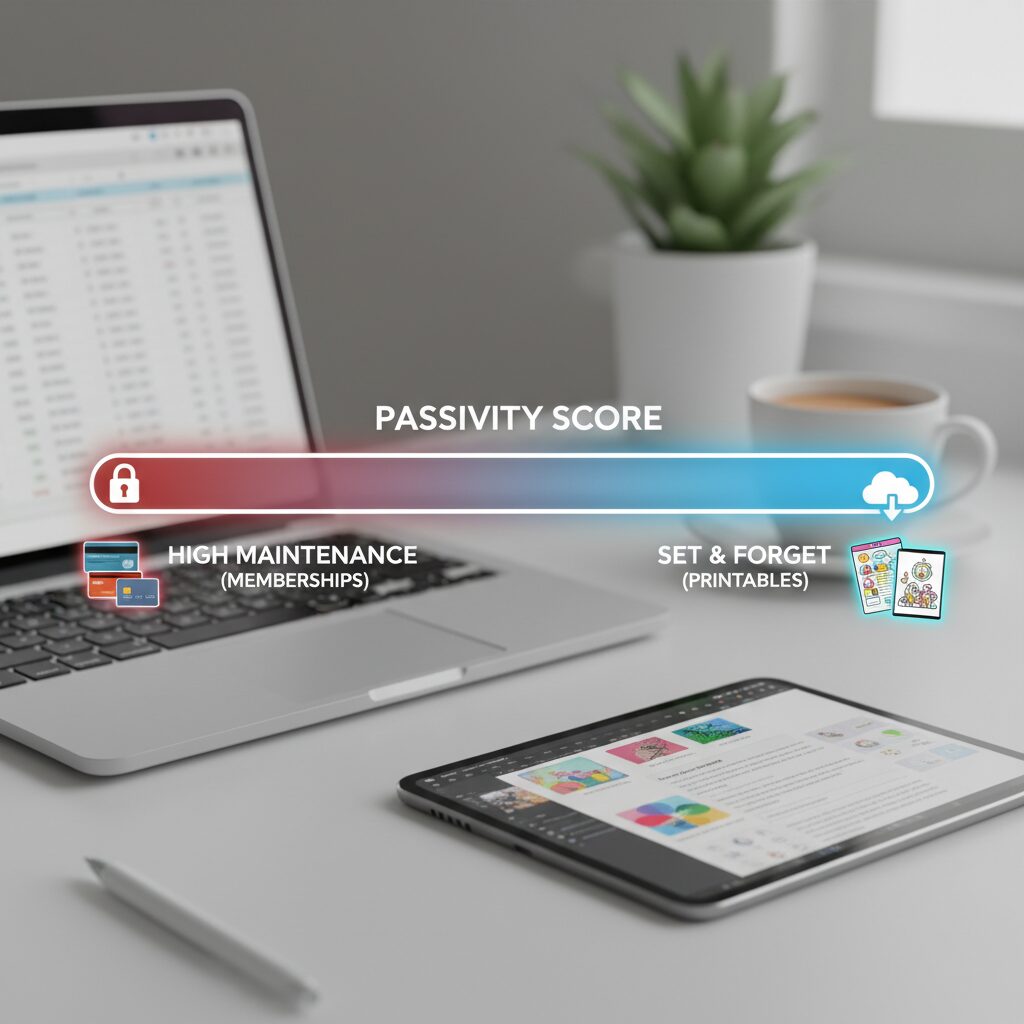
Unlike generic lists you might find on a Shopify blog, I’m not just going to list random ideas. We are going to rank these products by what I call the “Passivity Score”—a ratio of the effort it takes to set up versus the maintenance required to keep selling it. Because if you have to rebuild the product every week, it’s not passive income; it’s just a job with no boss.
The “Golden Triangle” of Profitable Digital Products
Before we dive into the specific products, we need to agree on what makes a product “best.” In my opinion, if a digital product doesn’t hit three specific criteria, you shouldn’t waste your time building it. I call this the Golden Triangle.
1. Scalability: Why Selling Time Kills Wealth
I see so many talented people get stuck in the freelance trap. You charge for an hour, you get paid for an hour. If you stop working, the money stops. True passive income requires a product that can be sold 1,000 times while you sleep without requiring 1,000 additional hours of work.
2. Margin: The Math is on Your Side
I’ve dabbled in dropshipping, and let me tell you—managing inventory and razor-thin margins is a headache. Digital goods typically command 90%+ margins. Your only costs are hosting and transaction fees.
3. Automated Delivery
According to Sacra’s analysis of Gumroad Financials (September 2024), the platform hit $21 million in revenue in 2023, flipping to massive profitability. This proves one thing: the infrastructure to automate delivery (Gumroad, Shopify, ConvertKit) is now mature. The tech stack handles the heavy lifting so you don’t have to.
Tier 1: High-Ticket Education (High Effort, High Reward)
If you have specialized knowledge, this is your gold mine. While these take the most time to create, they offer the highest revenue per sale.
Signature Online Courses
The “course boom” wasn’t just a pandemic phase. Data from Statista/Stocklytics (October 2024) projects the global e-learning market revenue will reach $257 billion by 2028.
Here’s the reality check, though: people are tired of fluff. The market has shifted from “generic overviews” to “specific outcome” courses. You aren’t selling “How to use Excel”; you’re selling “Excel for Commercial Real Estate Analysis.”
What I find fascinating is the consumer mindset shift. A Teachable “Creator Connections” Report from October 2023 found that 40% of consumers say their decision to buy is influenced by a desire to support the creator directly. They want to learn from you, not a faceless corporation.
“92% of people dedicate at least one hour per month to digital learning.”
Source: Thinkific Digital Learning Trends (January 2024)
Micro-Learning Libraries & Paid Newsletters
Not everyone has six months to film a masterclass. Enter the “Micro-Course.” These are 60-90 minute deep dives into a single problem. They are easier to produce and easier for customers to consume.
We are also seeing a massive shift toward “ownership” of the audience. ConvertKit’s State of the Creator Report (May 2024) highlights that 28% of creators are now self-employed, moving away from relying solely on algorithm-based ad revenue. A paid newsletter (via Substack or Beehiiv) is a digital product that creates recurring revenue, which is the holy grail of stability.
Tier 2: The “Utility” Economy (Medium Effort, High Volume)
This is my personal favorite category for beginners. You aren’t selling “info”; you are selling “implementation.” You are saving the customer time.
Notion Ecosystems (Operating Systems)
If you think selling Notion templates is “dead,” look at the numbers again. According to Simple.ink and CNBC (December 2024), Notion’s user base exploded from 1 million in 2019 to over 30 million in 2024.
That is 30 million people who need help organizing their lives. The mistake I see people make is selling a basic “To-Do List.” Nobody pays for that. They pay for a “Second Brain,” a “Freelance Client Portal,” or a “Student Life OS.”
— Pat Flynn, Smart Passive Income
Top creators in this space are earning $100k+ annually purely from these templates, as noted in a March 2024 report by Foundation Inc. It’s a secondary market that didn’t exist five years ago.
Specialized Spreadsheets & Calculators
Business runs on Excel. If you can write a complex macro or create a financial model that saves a CFO five hours of work, they will happily pay $50 for it. This is high-intent traffic. Someone searching for “SaaS Churn Calculator Excel Template” has a credit card in hand.
AI Prompts & Workflow Automation Scripts
This is the 2025 trend you cannot ignore. The Adobe State of Creativity Report (2024) found that 82% of creatives are currently using and plan to continue using generative AI.
However, getting good results from AI is hard. Selling “Mega-Prompts” (complex instructions for ChatGPT or MidJourney) is a booming micro-economy. You are essentially selling the “code” to unlock the AI’s potential.
Tier 3: Creative Assets & “Quick Wins” (Low Barrier)
These products are cheaper ($5 – $20), so you need volume. But once they are up, they are truly set-and-forget.
Digital Planners & GoodNotes Stickers
This market is heavily driven by iPad users. It ties perfectly into visual search engines. According to Pinterest Business data (2024), Pinterest users are 7x more likely to purchase products they’ve saved. If you can create aesthetic planners, Pinterest is your marketing engine.
Lightroom Presets & LUTs
Video is dominating social media, but color grading is difficult. Selling LUTs (Look Up Tables) to YouTubers or Presets to Instagram influencers is a solid business. It solves a technical problem with a one-click solution.
Stock Assets (Audio, Video, Vectors)
I’m cautious here. Standard stock photography is being eaten by AI. However, specialized vectors, authentic sound effects, and B-roll that feels “human” are still in high demand because AI video isn’t quite there yet for everything.
| Product Type | Passivity Score | Profit Potential | Competition |
|---|---|---|---|
| Online Courses | Medium | High ($$$) | High |
| Notion Templates | High | Medium ($$) | Medium |
| Digital Planners | Very High | Low ($) | Very High |
| AI Prompts | Medium | Medium ($$) | Low (Emerging) |
How to Validate Your Product Before Building (Don’t Skip)
I’ve made the mistake of spending three months building a course nobody wanted. Don’t do that. You need to validate first.
The “Pre-sale” Strategy
Set up a landing page. Describe the product. Put a “Buy Now” button on it. If people click and buy, then you build it (and refund the early birds or tell them it’s a pre-order). If nobody buys, you just saved yourself months of work.
Using “People Also Ask” for Market Research
Go to Google. Type in your niche. Look at the “People Also Ask” box. These are real questions real humans are asking. If you see “How to track habits in Notion,” that is a product idea.
The AI Threat: How to “Future-Proof” Your Digital Goods
It’s the question on everyone’s mind: “Why would someone buy my template if they can ask AI to make one?”
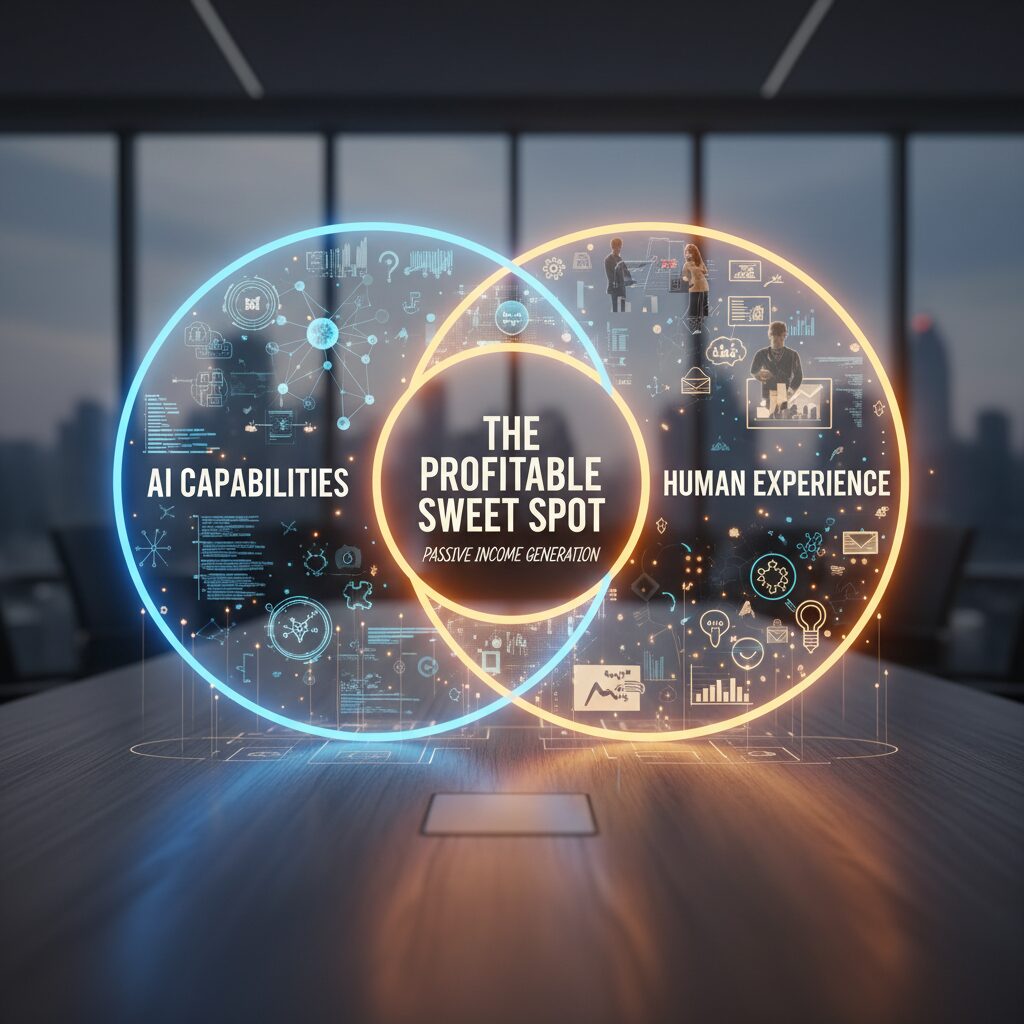
It’s a valid fear, but here is the counter-argument. According to the 2024 Thinkific Trends Report, “While 49% of people would consume content created by AI, they greatly prefer content that still has a human touch.”
Generic information is dying. AI can give you a list of ingredients, but it can’t give you Grandma’s experience of how the dough should feel. To future-proof your digital products, you must add the “Human Element”:
- Curation: AI gives you everything; you give the best things.
- Context: Explain why the template works, based on your experience.
- Community: Offer access to a Discord or circle along with the download.
FAQ: Selling Digital Products
What is the most profitable digital product to sell?
In terms of revenue per sale, Online Courses remain the king. However, for pure profit margin relative to time spent (passivity), Templates (Notion/Excel) are superior because they require almost zero post-sale support compared to students in a course.
Can I sell digital products with no money?
Absolutely. This is the beauty of the model. You can create a PDF or template using free tools (Canva, Google Sheets, Notion) and list it on Gumroad or a free WordPress plugin. You pay nothing until you make a sale.
Is selling on Etsy worth it in 2025?
Yes, but with a caveat. Etsy is fantastic for “searchable” visual assets like printable planners or wedding invitations because it brings the traffic to you. However, for high-ticket items like courses or business templates, you should build your own brand/site to avoid Etsy’s fees and control your customer data.
How do I protect my digital products from theft?
You can never stop it 100%, but you can deter it. Use PDF stamping (automatically adding the buyer’s email to the footer), DMCA badges, and clear Terms of Use. Most importantly, make the product valuable through updates. If a pirate steals version 1.0, your paying customers are already enjoying version 2.0.
Conclusion
The digital product landscape in 2025 is more competitive than it was five years ago, but the market is also significantly larger. The “Creator Economy” approaching $480 billion isn’t just a statistic; it’s a signal that people value specialized, curated knowledge and tools over generic corporate solutions.
If I can leave you with one piece of advice: Start with Tier 2. Build a utility—a template, a calculator, a preset. It teaches you the mechanics of selling online without the overwhelming pressure of filming a full course.
Pick one problem. Solve it once. Sell the solution forever.
