


Is Print on Demand a Viable Passive Income Source in 2025?
I’ve been analyzing the ecommerce space for years, and I’ve seen the shift firsthand. In 2018, you could slap a generic cat design on a T-shirt and sell it. In 2025, that strategy guarantees failure. Yet, the data suggests the opportunity is actually bigger now than it was then—provided you treat it as an asset class, not a lottery ticket.
This article moves beyond generic advice. We are going to look at the massive Printful and Printify merger, realistic profit margin calculations, and the exact “front-loaded labor” strategy used by the 35% of stores that actually survive.
The Reality Check: Active Work vs. Passive Income
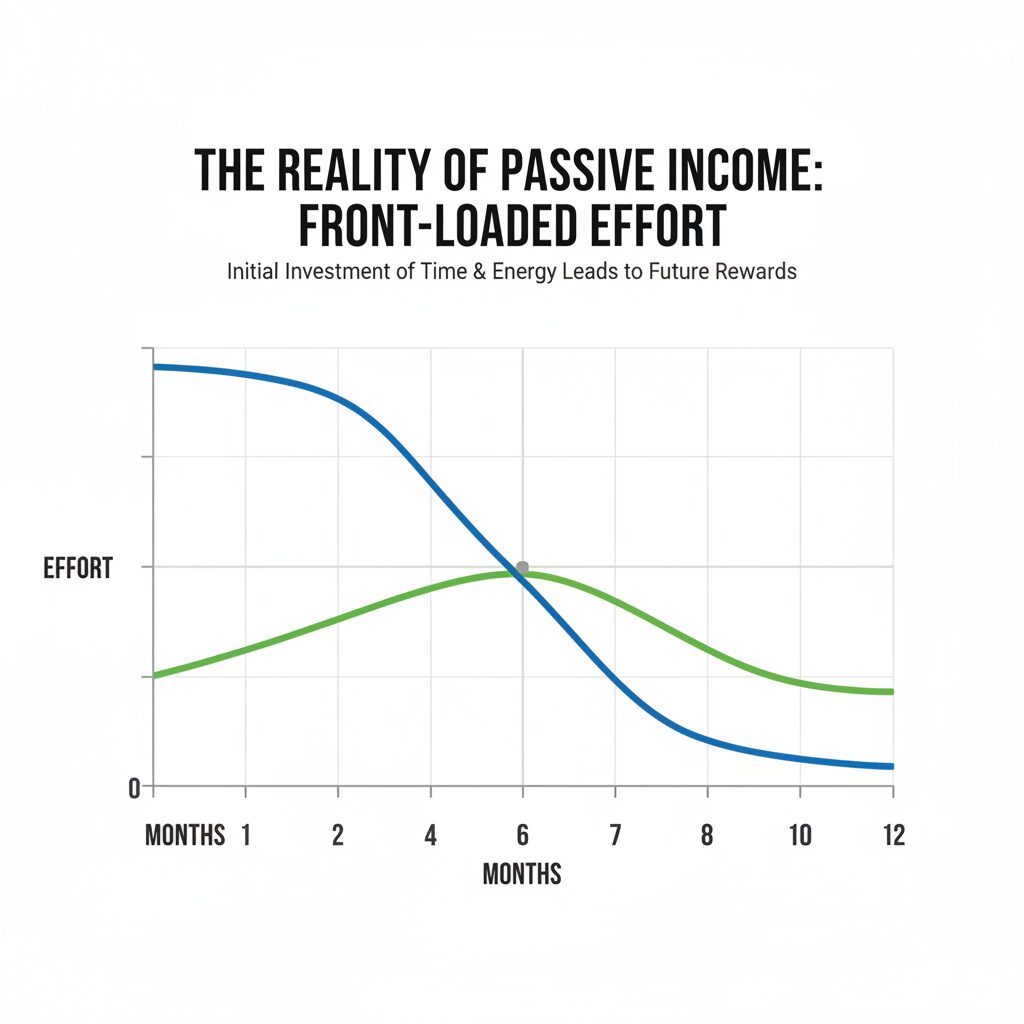
Let’s clear up a misconception that kills most beginners’ dreams before they start. Print on demand is not passive income in the beginning. It is an inventory-free business model that requires significant upfront “sweat equity.”
I like to call this the “Asset-Based” Income Model. When you create a unique design, optimize the SEO for it, and upload it to a marketplace, you have built a tiny digital asset. That single asset might only make you $2 a month. But if you build 1,000 of them, you have an engine.
The Survival Statistics
Why do so many people claim POD is dead? Because they quit too early. According to data analysis from Dropshipping.com and Podbase, approximately 24% of POD stores remain active after three years. That means nearly 65% fail within the first 12 months.
The primary reason for failure isn’t the products; it’s a lack of marketing and the expectation of instant results. You aren’t just “listing products”; you are competing for attention in a crowded economy.
Revenue vs. Profit: The 20% Rule
You will see YouTubers flashing screenshots of $50,000 in revenue. Do not be fooled. Revenue is vanity; profit is sanity. According to the 2024 Printify Profit Margins Guide, the average net profit margin for a successful store hovers between 15-20%.
However, highly optimized niche stores—specifically those focusing on jewelry or home decor rather than just apparel—can push this to 40%. We will break down the exact math later in this guide.
State of the Industry 2025: The Merger That Changed Everything
If you are reading articles that pit Printful against Printify as fierce competitors, you are reading outdated information. In a massive shift that shook the industry, these two giants announced a merger on November 5, 2024.
“This is an exciting moment for everyone. Printify is a business that we have long respected… Our combined company will give our merchants more: more top-quality products, more places to sell, more innovative solutions.”
— Alex Saltonstall, CEO of Printful.
What This Means for You
For the passive income seeker, this is actually good news. In the past, sellers had to choose: pay higher prices on Printful for better quality control, or use Printify for lower prices but inconsistent providers. This consolidation is expected to stabilize pricing and standardize fulfillment networks, reducing the “active” work you have to do managing customer complaints about shipping delays.
Market Growth Forecast
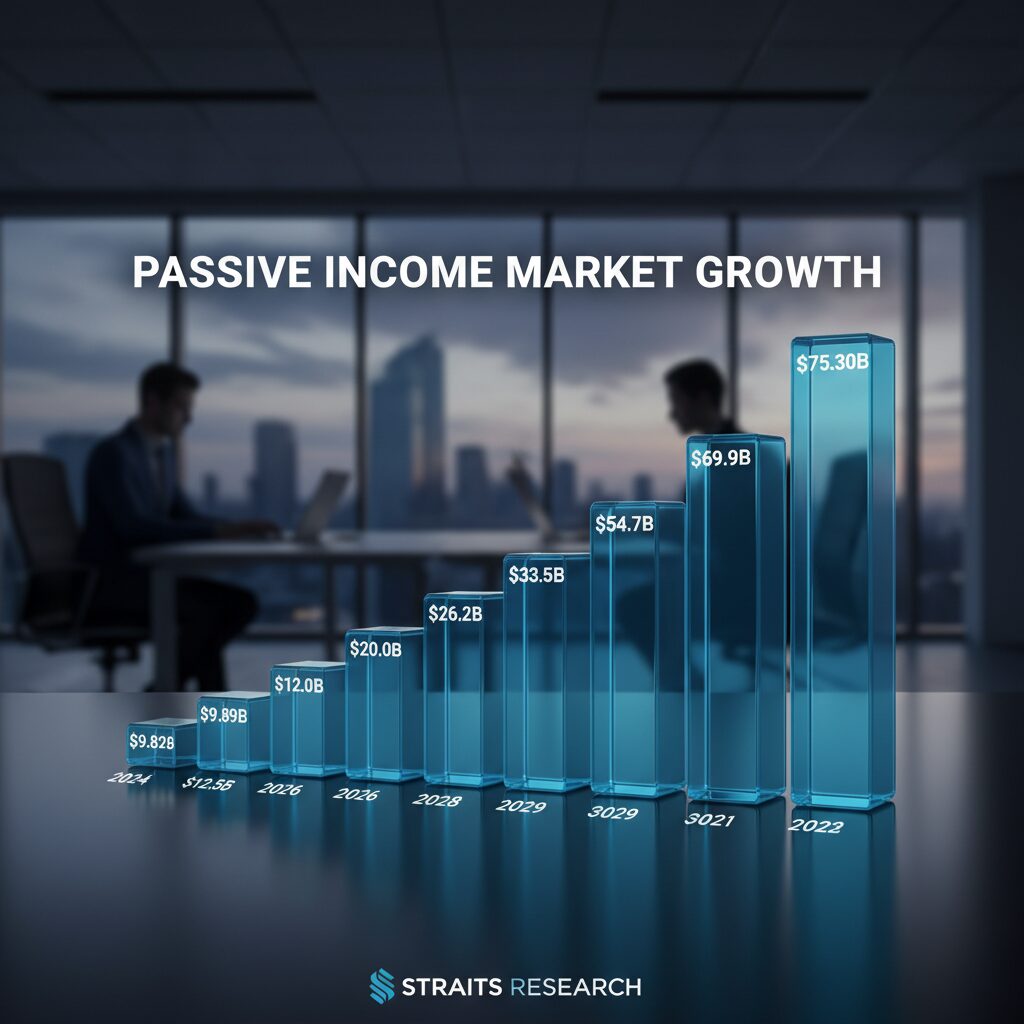
Despite the saturation talk, the market is expanding. A 2024 report by Straits Research valued the global print-on-demand market at $9.89 billion and projects it to reach $75.30 billion by 2033. That is a Compound Annual Growth Rate (CAGR) of 25.3%.
The money is there. The question is, how do you grab your slice?
How to Build the “Passive” Engine (Step-by-Step)
I’ve broken this down into the three phases of asset building. This is the exact roadmap used by six-figure sellers.
Step 1: Niche Selection (Stop Selling T-Shirts)
The T-shirt market is the most saturated sector on the planet. To succeed in 2025, you need to pivot to “High Perceived Value” items.
- Home Decor: Wall art, bedding, and rugs.
- Pet Products: Custom pet portraits (high emotional value).
- Eco-Friendly Gear: According to McKinsey & Company (2024), 78% of Gen Z consumers cite sustainability as a priority. Selling organic cotton or recycled materials isn’t just nice; it’s a conversion strategy.
Step 2: The Tech Stack
You have two main paths:
- The Marketplace Path (Etsy/Amazon): High organic traffic, but high fees. Good for beginners with $0 marketing budget.
- The Brand Path (Shopify/TikTok Shop): You own the customer data, but you must drive your own traffic.
In 2025, TikTok Shop has become a massive player for impulse buys, integrated directly via apps like Printful.
Step 3: Design Automation
This is where the “passive” part comes in. You cannot manually design every pixel. Successful sellers use tools like Kittl or Canva combined with AI to create templates. If you create one “Vintage Sunset” style, you should be able to replicate it across 50 different hobbies (Fishing, Gaming, Knitting) in minutes. This is called scalable design architecture.
Calculating Your Potential Earnings
Let’s do the math. Many beginners get burned because they don’t factor in the Customer Acquisition Cost (CAC). Here is a functional calculator to help you estimate real profits.
POD Profit Calculator
Notice how quickly a $5.00 ad spend eats into your profit? This is why Shopify’s 2025 Future of Commerce Report highlights that organic community building is becoming more valuable than paid ads.
3 Real-World Success Stories (Verified)
It helps to see what is possible. These aren’t hypothetical; these are verified case studies.
1. The Etsy Powerhouse: Starfish USA
According to a July 2024 analysis by InsightsByJess, this store focuses on general humor and pop-culture T-shirts. With approximately 46,000 sales in three years, their estimated revenue hits $250,000/year. Their secret? Volume. They have thousands of listings, utilizing Etsy’s organic search algorithm to drive traffic without heavy ad spend.
2. The Multi-Platform Pro: Ryan Hogue
I’ve followed Ryan’s “Method” for years. In a December 2024 income report video, Ryan detailed how his automated print-on-demand setups across Amazon Merch, Etsy, and Walmart generated over $150,000 in profit. His strategy involves “Cross-listing”—taking one design and putting it on every available marketplace to maximize exposure.
3. The Niche Strategist
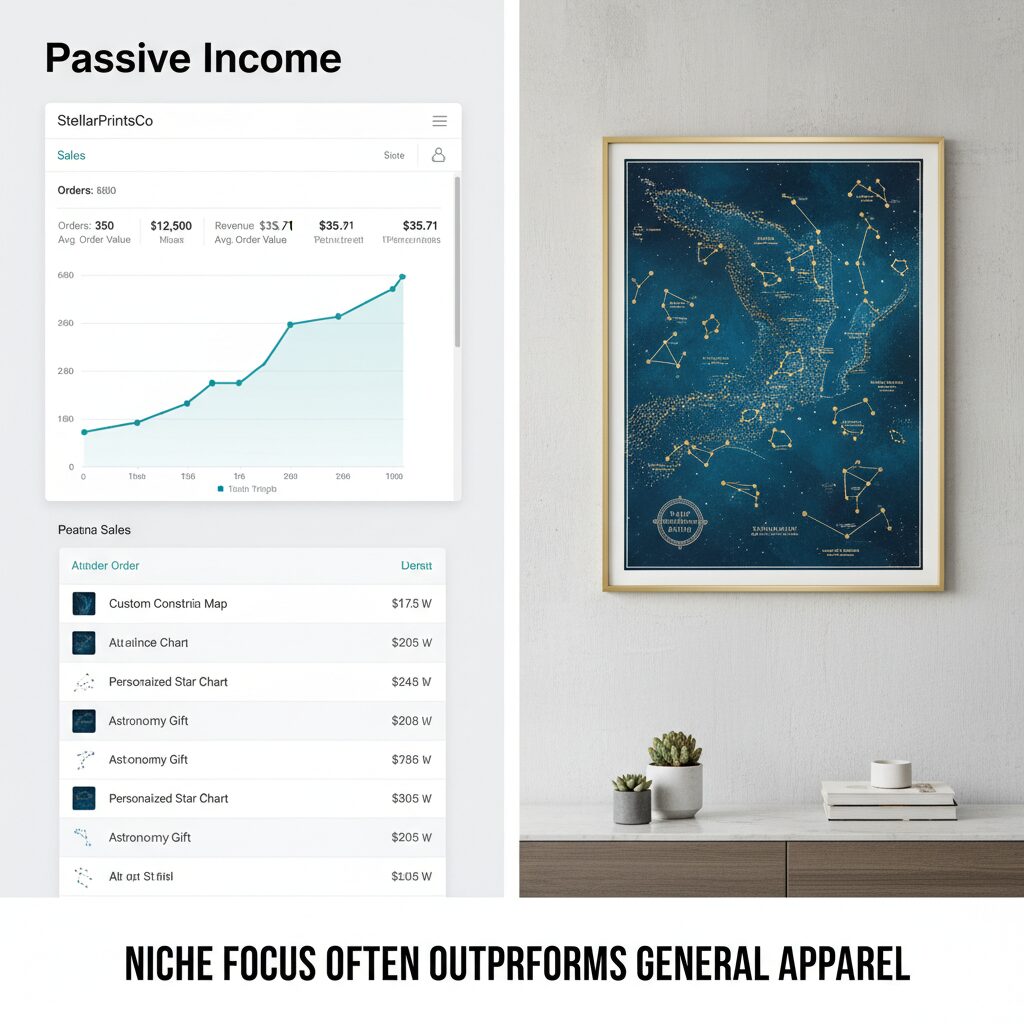
A recent Reddit case study highlighted a seller focusing strictly on “map prints” for small towns. By targeting low-competition keywords (e.g., “Map of Olathe, Kansas”), they generated $11,000 profit in a single run. This proves you don’t need to be viral; you just need to be relevant to a specific group.
Common Pitfalls & How to Avoid Them
If you want this to be passive, you must avoid legal landmines.
Relying Solely on Organic Traffic
While organic traffic is great, it’s unpredictable. The moment Etsy changes its algorithm, your income disappears. The true “passive” income pros build an email list. An email list is an asset you own that no algorithm can take away.
FAQ: Your Questions Answered
Is Print on Demand dead in 2025?
No, but the “low effort” model is dead. The market is growing at 25.3% CAGR, but demand has shifted toward personalized and eco-friendly products. You cannot succeed with generic designs anymore.
How much does it cost to start?
You can start for $0 on platforms like Redbubble or Merch by Amazon. If you choose Shopify, expect to pay roughly $29/month plus the cost of a domain ($14/year). It is one of the lowest-risk business models available.
Can I use AI for designs?
Yes, tools like Midjourney and DALL-E 3 are excellent for generating assets. However, Harley Finkelstein, President of Shopify, noted in 2025 trends that customers crave “human connection.” If your art looks too generic or “AI-generated,” it may sell less. Use AI as a tool, not the entire artist.
Did Printful and Printify merge?
Yes. As of November 2024, they have merged. This allows for a more robust supply chain, though they currently maintain separate user interfaces.
Conclusion: The Final Verdict
So, is Print on Demand a source of passive income? Yes, but only in Year 2.
Year 1 is about aggressive active work: researching niches, testing designs, and building your digital catalog. Once that catalog is established and optimized, the income becomes passive as the flywheel begins to spin.
The merger of Printful and Printify has stabilized the infrastructure, and the market demand for custom merchandise is hitting all-time highs. The only missing variable is your willingness to do the upfront work.
Start today. Pick a niche that isn’t T-shirts. Design 50 products. And treat this like a business, not a hobby.
